Travelogue for the West Coast of Australia: From Perth to Broome

My 3-month Australia trip also brought me to the largest state of Australia: Western Australia! After I had already spent just under 4 weeks from Adelaide to Perth (read travelogue) after a 5-day stay in Perth, I was to head north to Broome! The west coast of Australia wanted to be discovered! The 3,500-kilometre route from Perth to Broome is spectacular and full of highlights.
Highlights in Western Australia: What awaits you!
Lots of nature and the endless expanses of the outback await you. Turquoise sea, white sandy beaches, colourful coral reefs, the gentle giants of the sea with whale sharks and wonderful national parks. Pink lakes, vast eucalypt forests and endless expanses of uninhabited land. Small sleepy towns with often only one restaurant and, thanks to the lack of lights, incredible starry skies with the Milky Way at night. Most striking, however, are the great distances that have to be covered here if you want to get from A to B. This is also one of the reasons why it's so beautiful.
This is also one reason why the west coast of Australia attracts far fewer tourists than the much more densely populated east coast. Australians told me about this during the first "part" of the road trip from Adelaide to Perththat the west coast is the "real Australia" and that you don't get to see these unique beauties on the east coast.
The distances on the Australian west coast are much greater than on the east coast. The highlights are further apart, and accommodation is scarcer and more expensive. Therefore, the road trip is ideal to set off with a motorhome.
Route from Perth to Broome
Day 1: Perth
Day 2: Perth - Lancelin - The Pinnacles (Nambung National Park). Overnight in Cervantes.
Day 3: Cervantes - Kalbarri National Park
Day 4 - 6: Kalbarri National Park
Day 7 -10: Denham (Shark Bay)
Day 11: Carnarvon
Day 12 -15: Ningaloo Reef Marine Park (swimming with whale sharks)
Day 16 - 19: Karijini National Park (→ detailed travel report and tips)
Day 20: Port Hedland (stopover only)
Day 21 - 25: Broome
Where to start your west coast road trip?
If you don't have 3 months to travel through South Australia, Western Australia and the Northern Territory(+ Outback), Perth is the ideal starting point for a road trip along the coast. You will also find good connections from Germany to Perth.
Perth, the largest city in Western Australia
Perth is not only the capital, but with 2.5 million inhabitants by far the largest and most populated city in Western Australia. What I particularly liked about Perth is that you can explore the centre (Northbridge and CBD) on foot. The city is also located by the sea. Residents have over 19 beaches to choose from. My favourite is Scarborough Beach, which is wider and more expansive than the more famous Cottleshoe Beach.
The views from Kings Park or Bell Tower are particularly great. You can find all my tips for Perth here. I spent a total of five days in the city, including a day trip to Rottnest Island and Fremantle, the idyllic suburb of Perth.
Tips for Perth with sights
More tips for Perth
Accommodation: The Alex Hotel in Northbridge*. Very centrally located, has stylish rooms and a great roof terrace. There are also bicycles available for free hire.
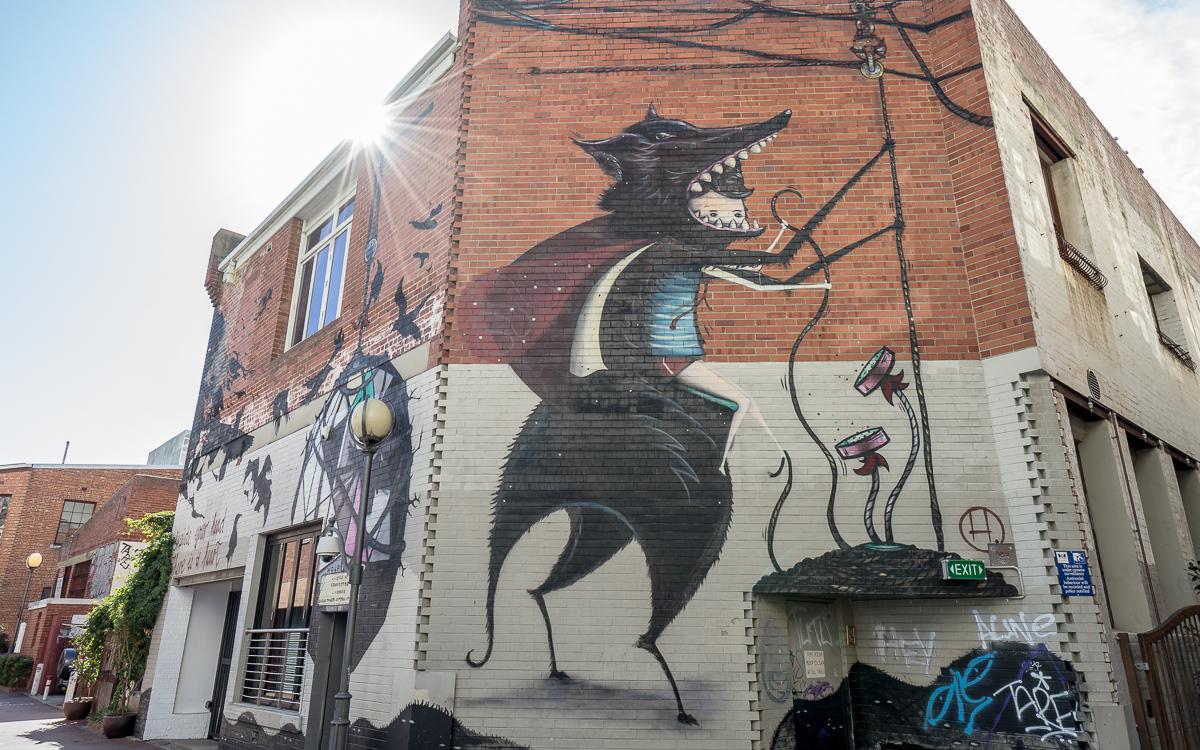
Street art in the Northbridge district of Perth - especially in Wolf Lane you will find great works of art. 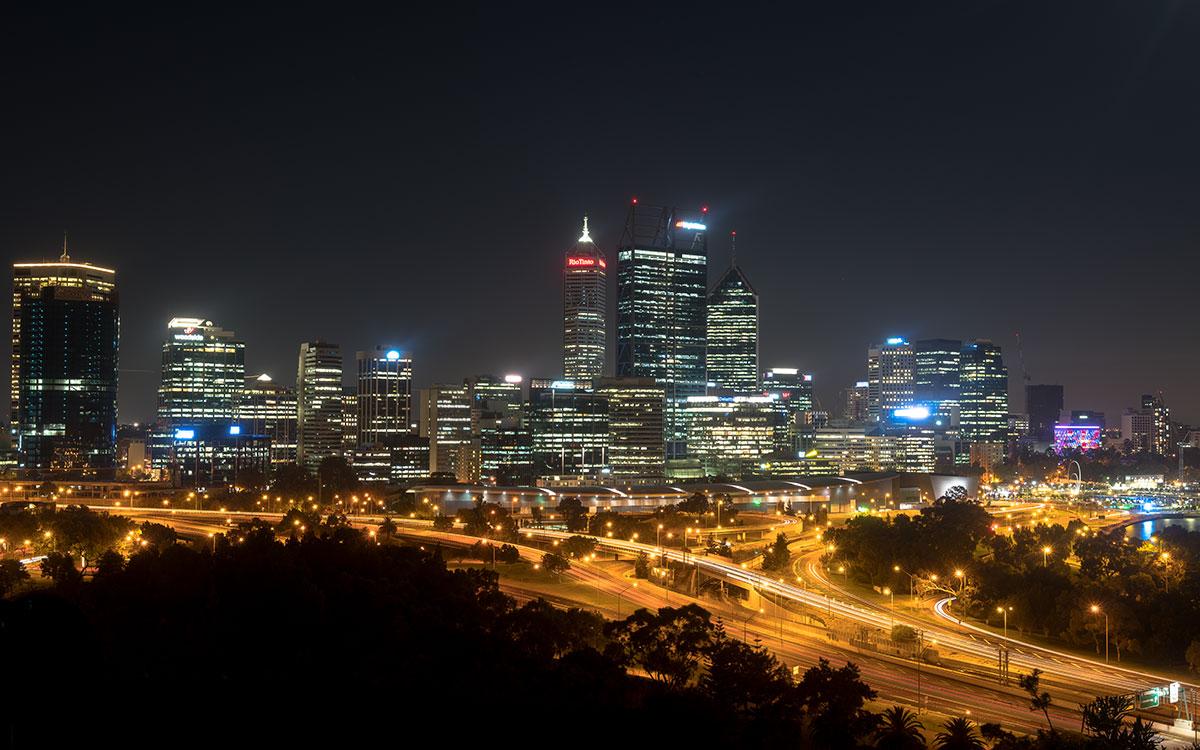 View from Kings Park in Perth Rottnest Island
If you are in Perth, you should take at least one day to visit Rottnest Island. It is home to what is said to be the "happiest animals in the world": quokkas. If I was fed the best fruit by tourists all day, I would be happy too.
But you shouldn't do that, because you can see the animals without feeding them. Over 10,000 quokkas live on "Rotto", as locals affectionately call their island.
The best way to explore Rottnest Island is by bicycle. Otherwise it is hardly possible to reach the beautiful secluded bays. The turquoise bays invite you to snorkel and surf. Beautiful!
You can read more about the day trip in the first part of my travel report.
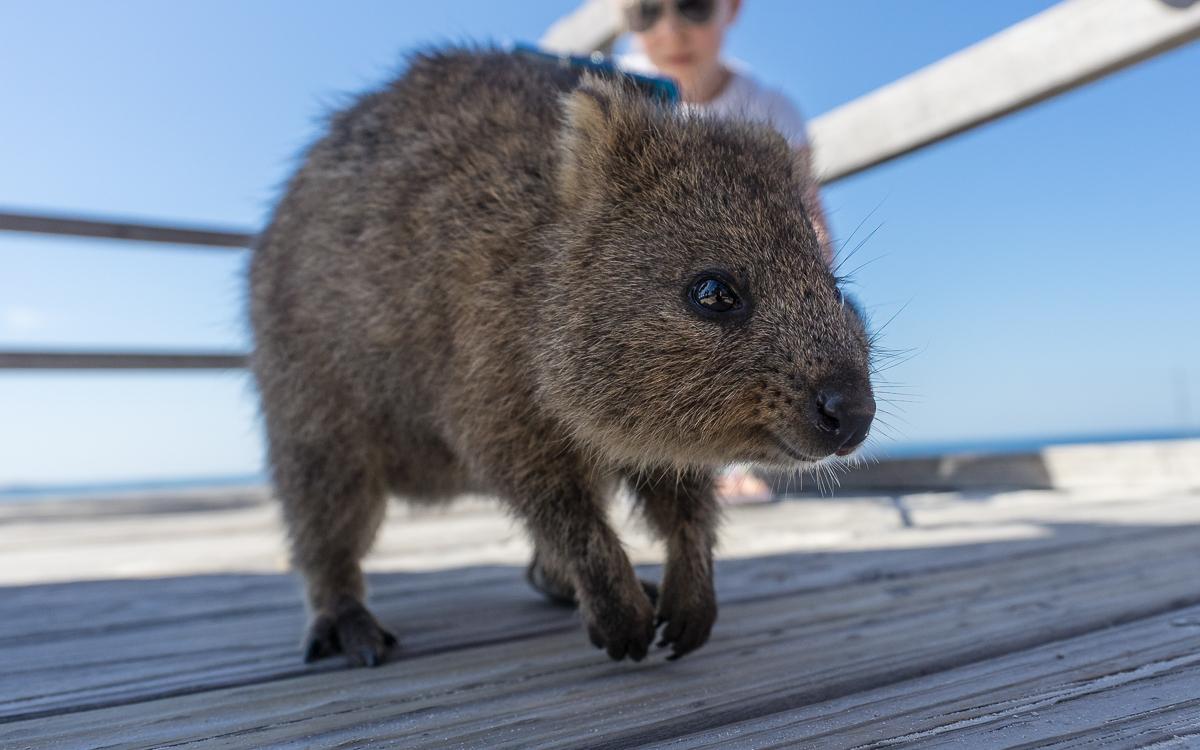
Quokkas and the selfie with one of these small marsupials are highly sought after. 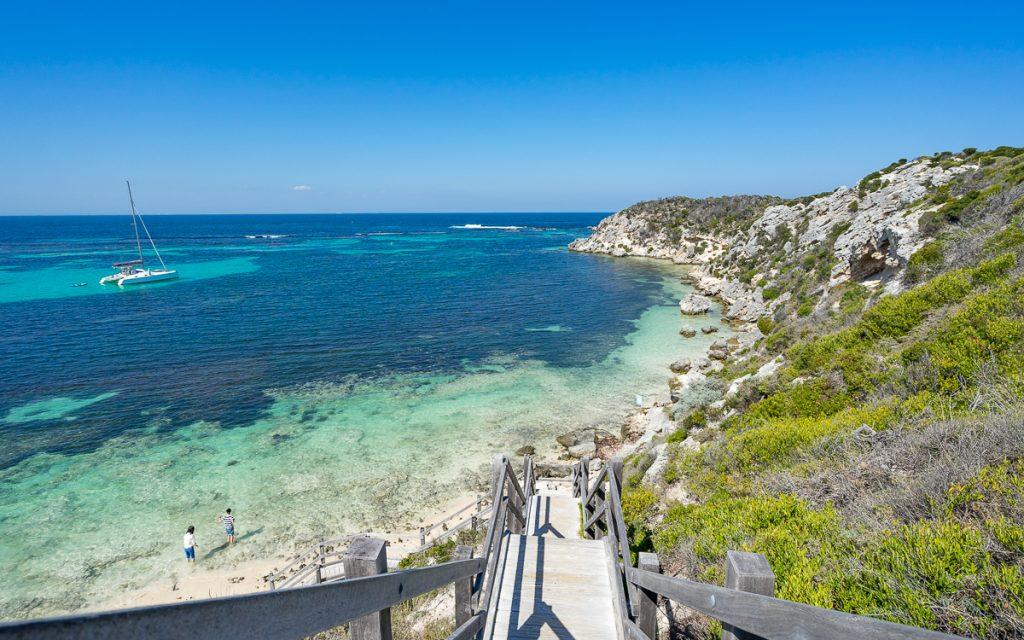 Fantastic beaches on Rottnest Island, the small island near Perth. Lancelin, white sand dunes
The former fishing village is literally flooded with tourists at holiday times. There are two reasons for this: The beach, which can also be accessed by cars (very popular with Australians), and the snow-white sand dunes that pile up at the edge of the village.
Things are no longer as idyllic here as they probably once were: the dunes have become an oversized adventure playground. You can rent boards for sandboarding everywhere in town or drive through the dunes on your four-wheel drive car, motorbike, quad or buggy. The Lancelin Off-Road Area attracts large crowds every day.
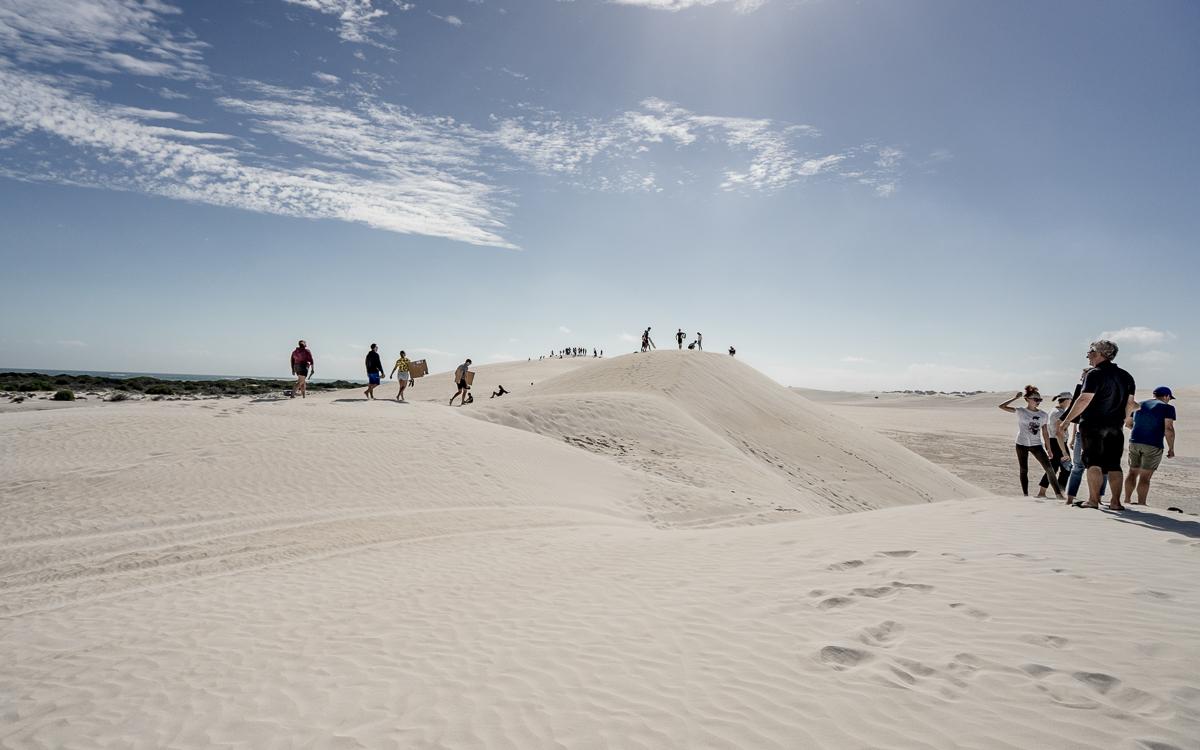
Sand dunes near Lancelin 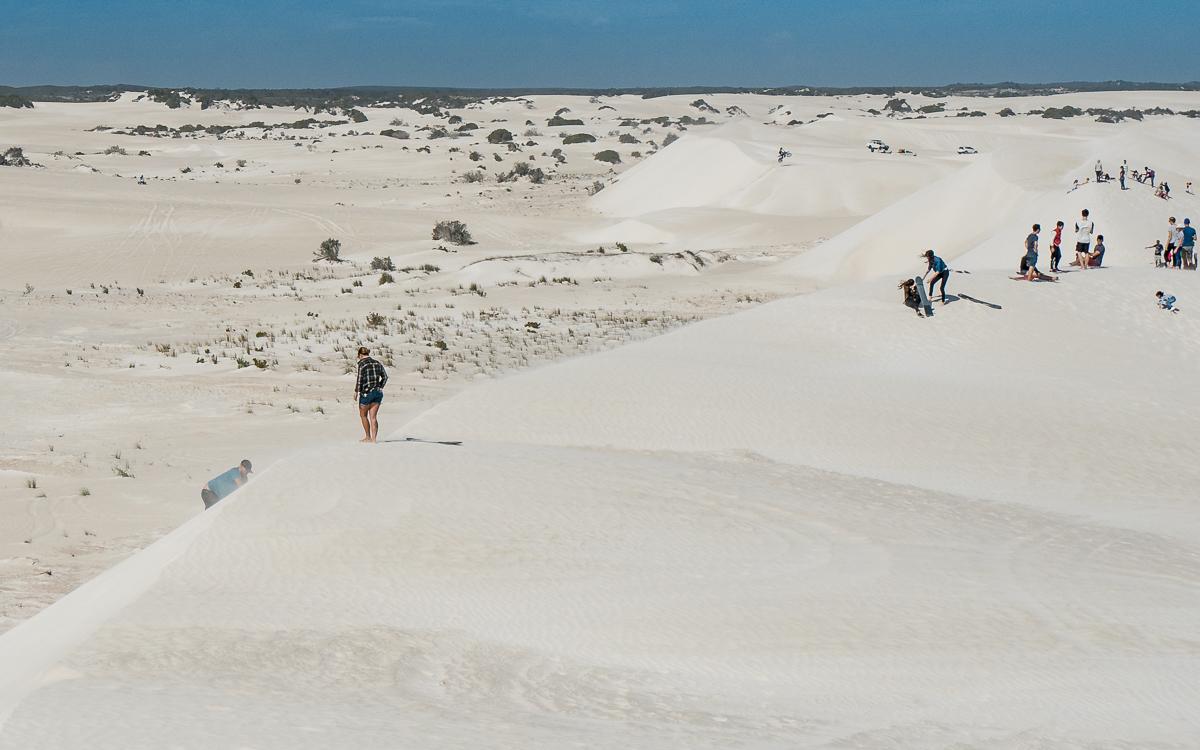 Bizarre Pinnacles at Cervantes (Nambung National Park)
One of the most famous sights in Western Australia is the Pinnacle Desert, about 200 km from Perth. Aug 4 km², a bizarre landscape of sand dunes and limestone pillars has formed, rising up to 5 m from the earth. The Indian Ocean Drive at Cervantes leads you through this desert with the Pinnacles, which are part of the Manung National Park.
You can explore them on foot or by car on the Loop. The best time of day to visit is in the early evening just before sunset or in the morning at sunrise. The light is warm then. Afterwards, you can check into accommodation at Cervantes and stay overnight in the village.
Info and tips about Nambung National Park
Entrance fee Nambung National Park: Day-pass for 12 AUD per car.
Overnight stay: Cervantes, The Pinnacles Edge Resort. As we only looked for accommodation 2 days before, we had to take what was left. Not an easy task due to the Easter holidays. The room was old, the WIFI reception did not reach the room (as almost always). OK for one night, but too expensive.
Tips for eating in Cervantes: Cervantes Bar and Bistro. Great food and large menu. Highly recommended.
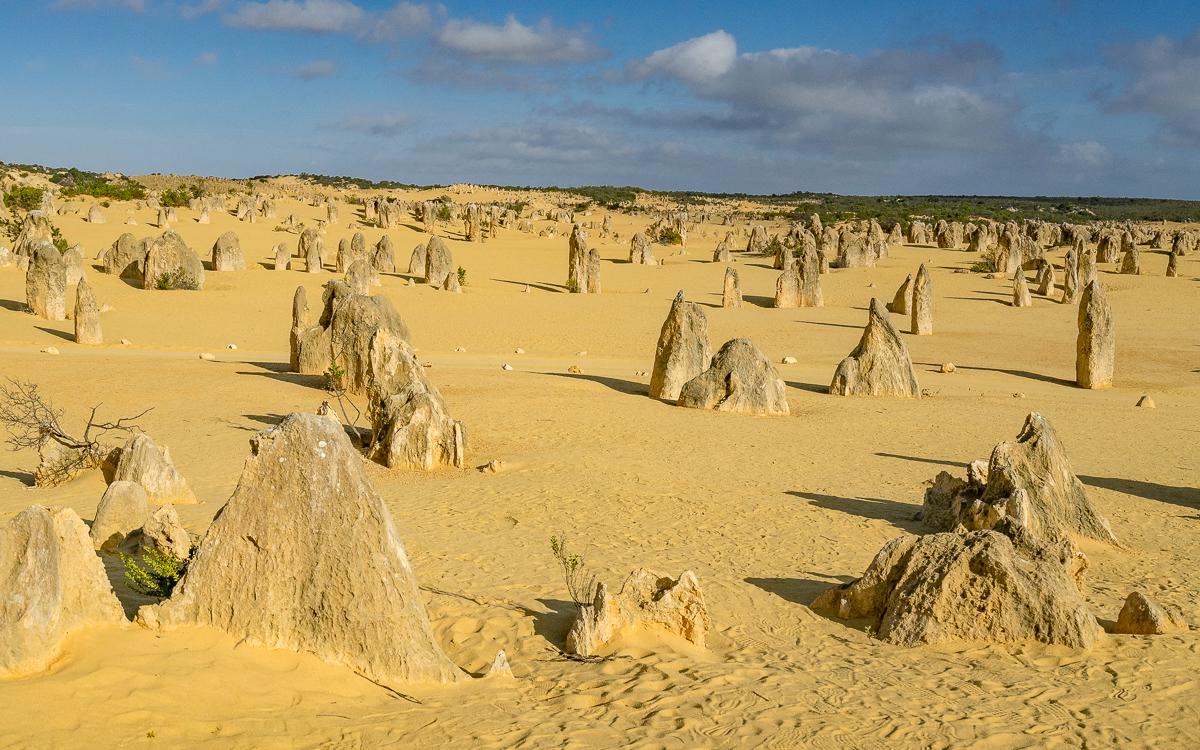
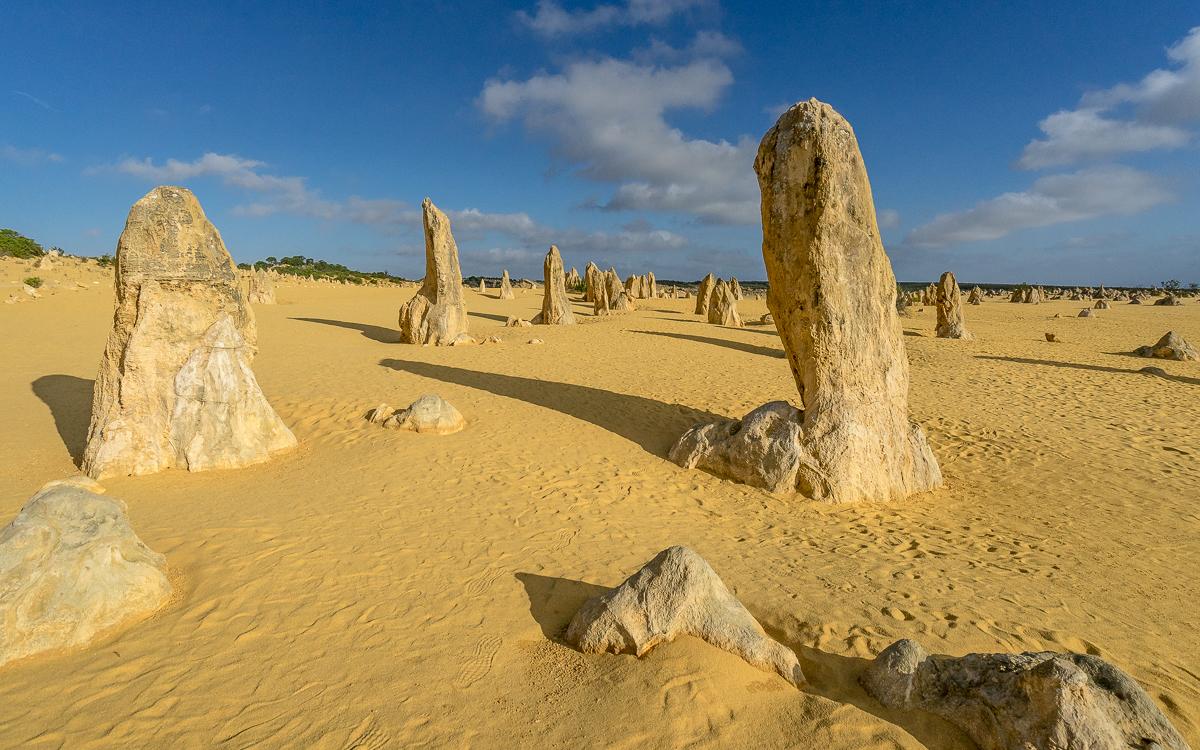
Shortly before sunset, the Pinnacles glow in vibrant colours. Stromatolites at Lake Thetis (Cervantes)
The small alkaline salt lake Lake Thetis has a depth of only 2-3 metres and looks quite unspectacular. If it weren't for the stromatolites. They belong to the oldest life forms on earth.
By the way, the lake is one of the few places in the world where you can see these living fossils. Not far away and on my further way there are more stromatolites at Hamelin Pool. The microbes that formed these stromatolites are similar to those recorded as the oldest life forms on Earth.
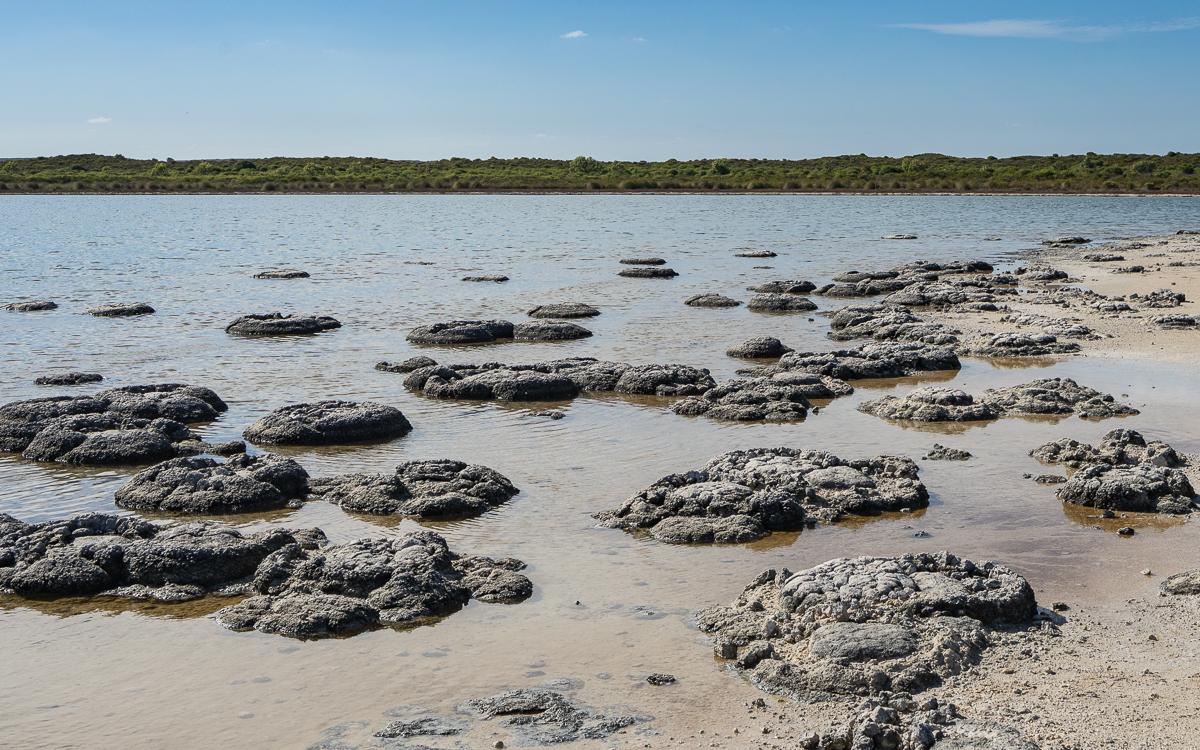
Stromatolites at Lake Thetis near Cervantes
Stops between Cervantes and Kalbarri
On the drive from Cervantes to Kalbarri there are a few places to stop for a short break. We stopped at Green Head (Dynamite Bay), Dongara & Port Dension, and Hutt Lagoon.
Green Head
I didn't find Dynamite Bay as exciting as described in the guidebook. You can walk to several Scenic Lookouts on dunes and have a good view of beaches and bays. I think there are better views and say: no "must stop".
However, after Green Head, I recommend taking the 5 km Tourist Drive along a great stretch of coastline. Here we had a lunch break between the sea and sand dunes.
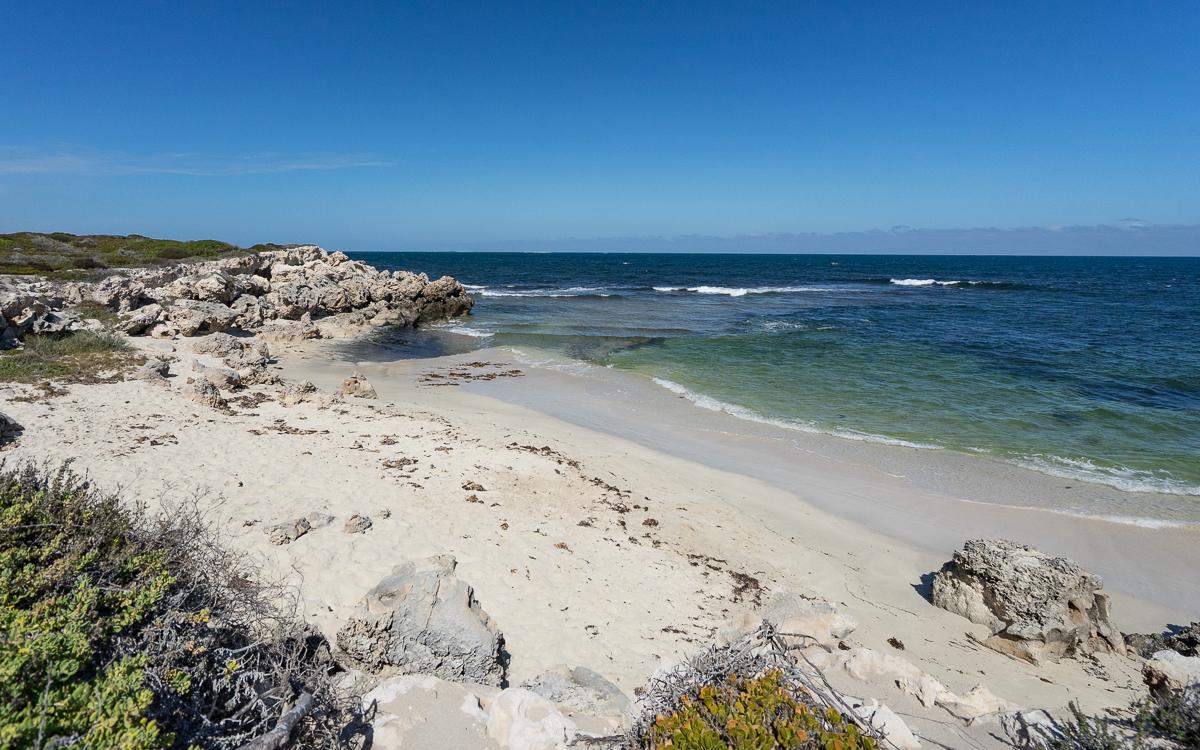
View of one of the bays at Dynamite Bay (Green Head) 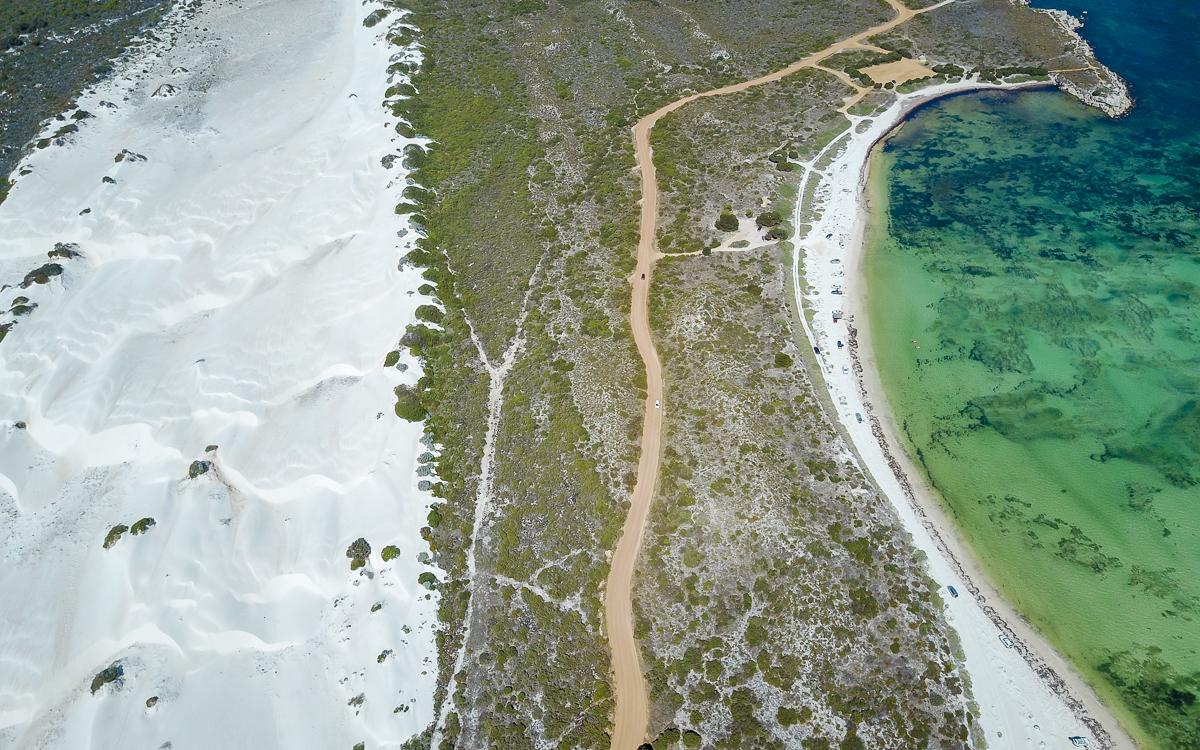 Tourist Drive at Green Head - great bays for swimming Dongara & Port Dension
Dongara with its old fig trees in the main street was also quite nice to drive through and a change on the long drive, but not a must if you don't want to take a break. We had an iced coffee here and then drove on again.
Pink Lake Hutt Lagoon
The next stage takes us along the coast to Kalbarri. On the way you have to stop at Hutt Lagoon, which you pass anyway. Depending on the rain, the lagoon is a half-dried salt lake, which gets its pink colour from algae. In our case, the salt lake was dried out over a large area, so we were able to walk on it. There is a car park from which you can explore the lake.
Thanks to a drone, I found a large section from above that still had water. Here the algae could do their job and the lake glowed in bright pink!
You can also walk on the dried-up Pink Lake 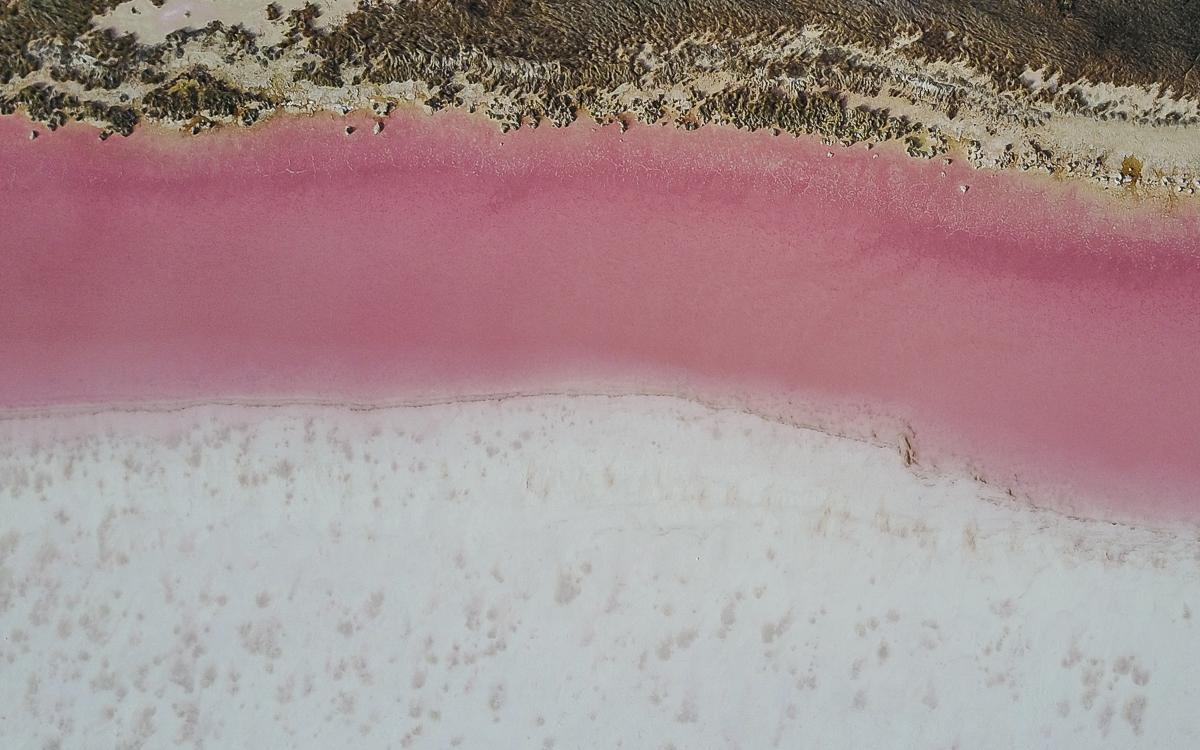 From above you can best see the places where the lake really glows pink Kalbarri National Park
The Kalbarri National Park is only 20 minutes outside the town of Kalbarri. We were lucky, because the national park is actually closed at the moment (construction work on the road). Thanks to the Easter holidays, the park was open for them. So we were able to visit Kalbarri NP with many Australians on Easter Monday to see the deep red gorges and the Murchison River.
Info about Kalbarri National Park
Entrance fee Kalbarri National Park: Day-pass for 12 AUD per car.
Overnight stay: Kalbarri Palm Resort. Again, we had to take what was left. Due to the Easter holidays, we had to be glad to get accommodation. The room was a typical motel room, large and with a small kitchenette. Unfortunately, the WIFI was broken during our visit.
Tips for food in Kalbarri: Delicious breakfast is available at The Gorges Cafe (Pelican's Cafe & Restaurant is also ok, but way too expensive). The best takeaway (or eat there) is at The Jetty Seafood Shack (probably the biggest portions of fries in Western Australia).
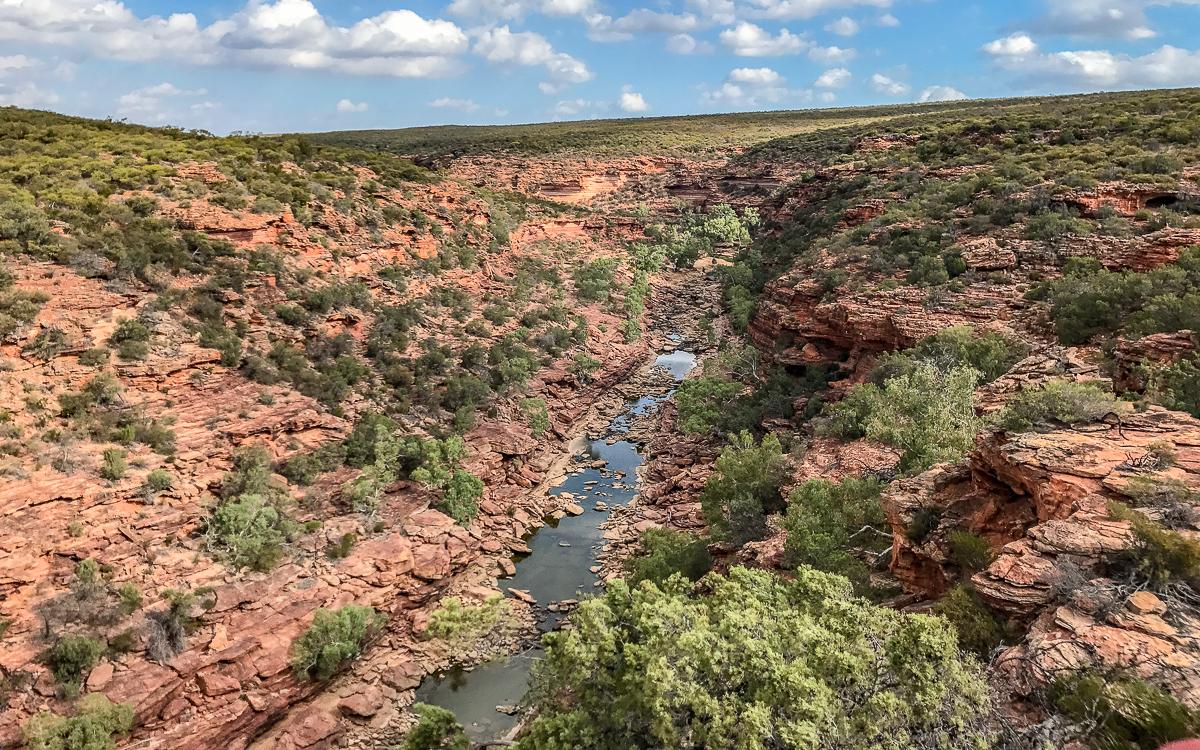
Hawks Lookout in Kalbarri NP is a little less spectacular and less frequented. 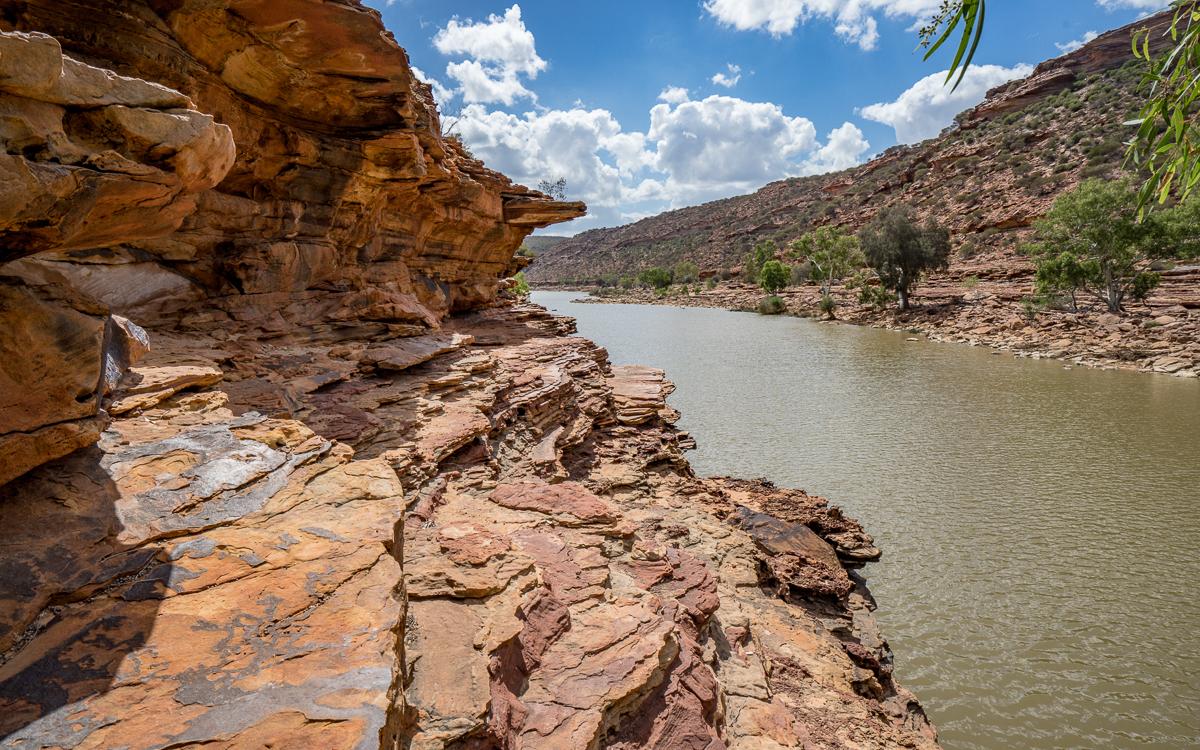 Climbs like the one in the picture are also necessary to walk the Loop Trail. Nature's Window - here you have to look if you want a picture. Shark Bay: dolphins, Shell Beach and stromatolites
Kalbarri and Denham are about 380 km apart. On the drive there are few places worth stopping for. In the Shark Bay region, you'll encounter colourful untouched wilderness and unique natural wonders in Francois Peron National Park. At Hamelin Pool, you'll find stromatolites. These 'living stones' are one of the oldest life forms on earth, made up of micro-organisms, and are a UNESCO World Heritage Site. Another natural wonder is Shell Beach: a beach made entirely of tiny white cockleshells!
Don't miss Francois Peron National Park, with its vast bushland and deep red cliffs set against a turquoise ocean. Here the water is so clear that you can see sharks and rays swimming in it from above. Guided day tours in a four-wheel drive jeep are available, for example, from Naturetime Tours. Also popular is the holiday resort Monkey Miawhere dolphins come right up to the beach every day and you can watch them being fed by rangers. For all other exploring, the small town of Denham is a good starting point.
Hamelin Pool
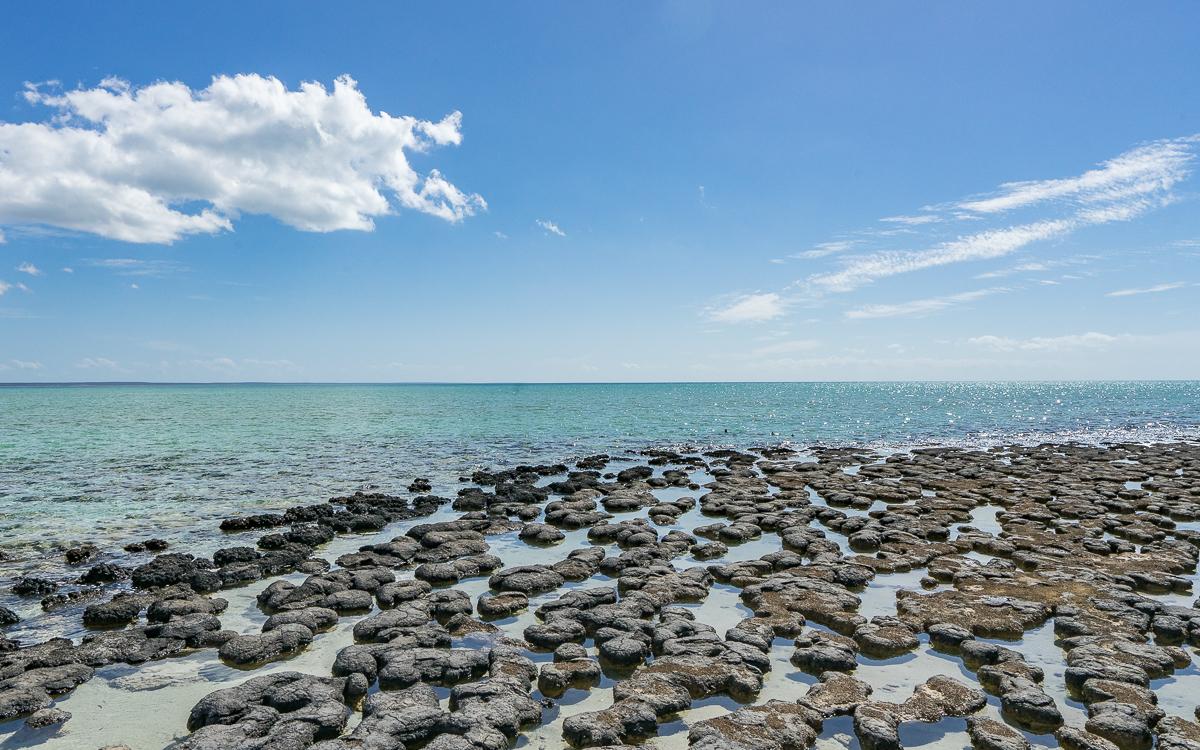
If you're wondering what life might have been like around 3 million years ago, you must visit Hamelin Pool. Here you can see the oldest living organisms on earth in the most beautiful natural setting: Stromatolites. These are also one reason why the Shark Bay region has been declared a UNESCO World Heritage Site.
A wooden walkway was specially built here so that you can see these living creatures up close and don't have to walk over the stromatolites.
Unfortunately, this fact does not seem to have got around everywhere yet, because a tourist climbs over the railing of the wooden walkway that has been built in order to climb over it and wash his hands in the crystal-clear water. It's just a pity that every sign says please don't walk over the stromatolites and that bathing is also forbidden at this section ...
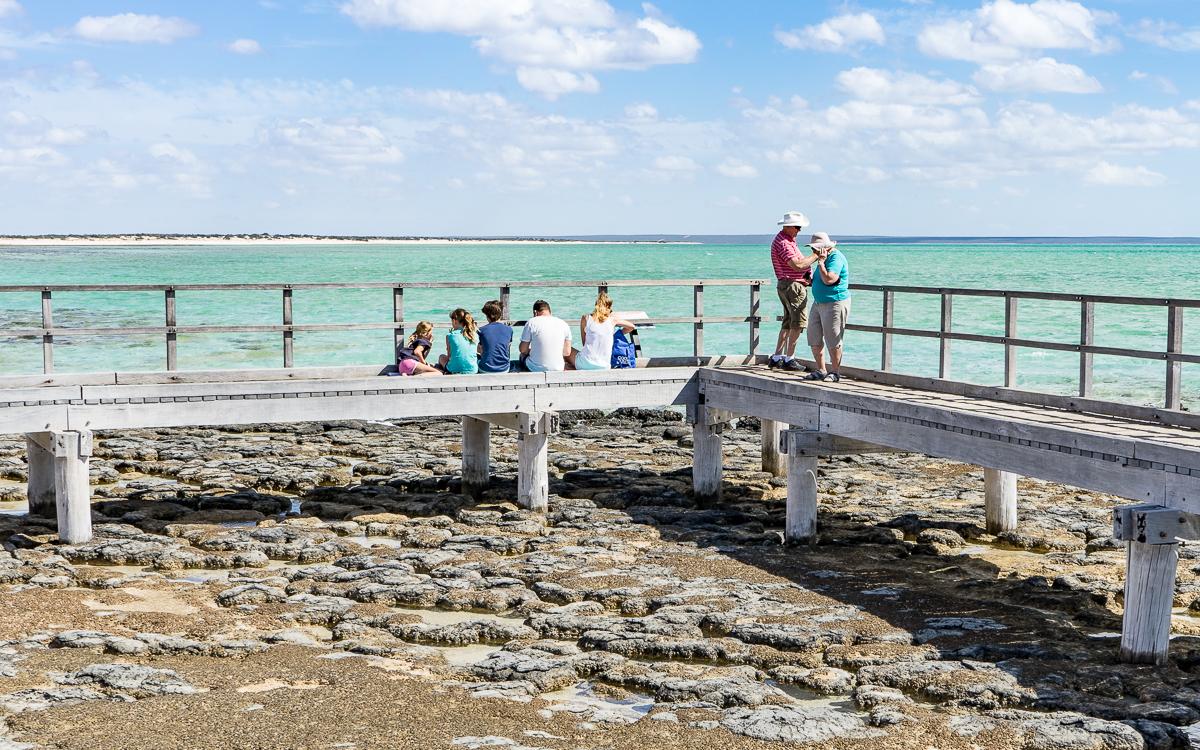
A place to take a break, these Australians think, and spread out their blanket on the jetty.
Shell Beach
Just under 40 km from Hamelin Pool and on the way to Denham we reach Shell Beach. This beach consists of small white cockleshells. According to the information board, the beach of shells stretches for 120 km and the shell cover reaches up to 10 metres deep underground.
In the past, these shells were even used to make stones, which can still be seen on some buildings in Denham and the ruins at the telegraph station in Hamelin.
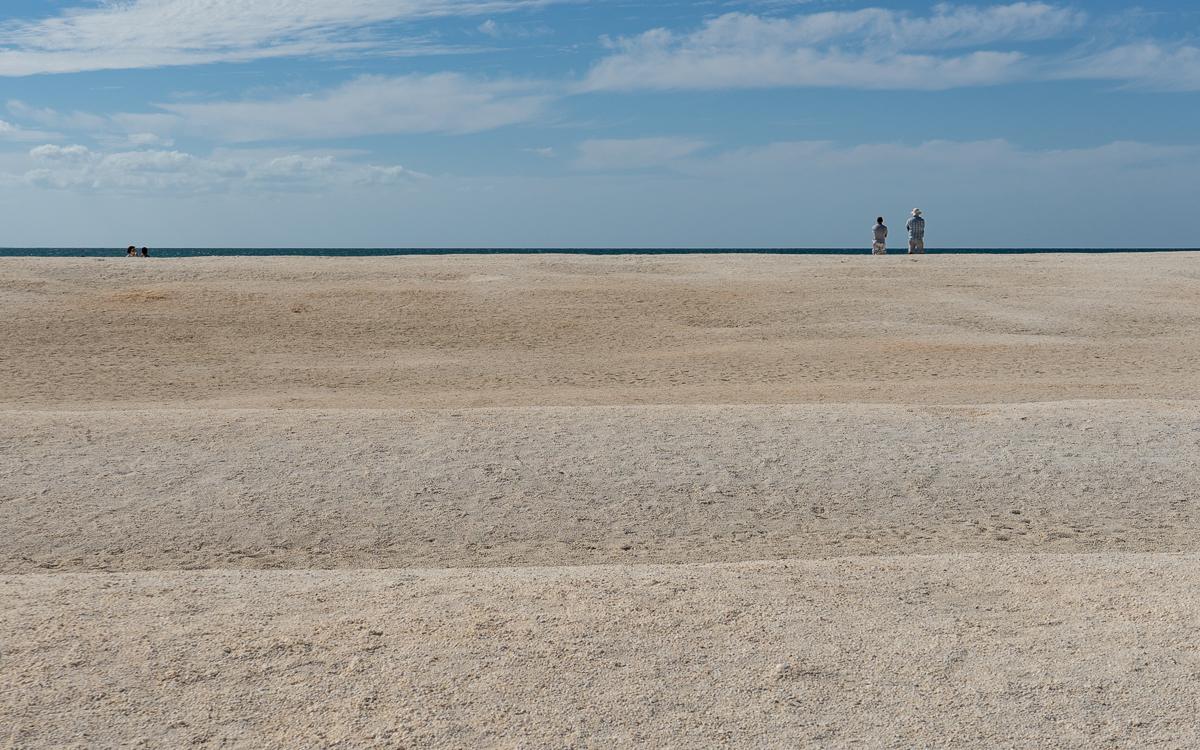
Dunes of shells and the sea behind them: Shell Beach 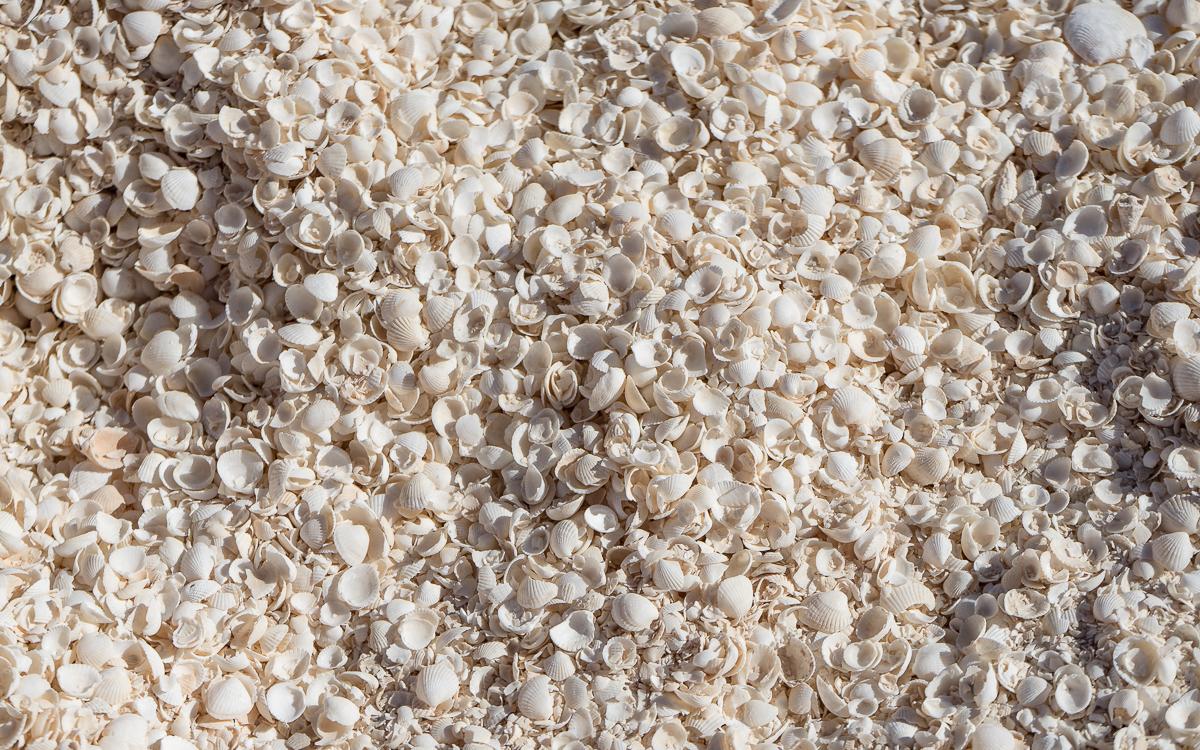 A long beach of cockleshells: Shell Beach
François Peron National Park
François Peron National Park, or Wulyibidi as Aborigines called this region 26,000 years ago, lies at the northern tip of the Shark Bay World Heritage Sanctuary.
Up to the former sheep farm you can drive with a normal vehicle. From here on, the only way is with a four-wheel drive vehicle with plenty of ground clearance. But only after you have let the air out of the tyres at the designated station. Because the rest consists of sandy - partly deep sandy - tracks.
But the effort is worth it - the bays, sand dunes and beaches are beautiful. Spectacular colour contrasts await us with red sand dunes, white sandy beaches and turquoise sea.
In addition, you can observe the sea creatures in the clear water with the naked eye from the cliffs and on the beach. It is not uncommon to see dugongs, sharks, turtles, dolphins, stingrays, manta rays and sometimes whales during the whale season.
Standing on the beach, we saw a turtle appear, swarms of stingrays and a small shark swimming in the water. This trip was one of the best experiences of my Australia trip so far.
More tips for Shark Bay and the National Park:
Tips for a tour in François Peron National Park: Naturetime Tours. Jens and Janine emigrated to Denham five years ago, have published various travel guides (see my tip below) and also offer tours. We did a full-day tour with Jens in the François Peron National Park. Absolute tip!
Entrance fee: 12 AUD per day and car.
Other tours in Shark Bay: Didgeridoo Dreaming Night with Capes by Wula Gura Nyinda. Unfortunately, the tour was fully booked due to the Easter holidays. We met Capes on the way to François Peron National Park - a super nice guy with whom I would have loved to do this tour.
Accommodation in Denham: Bay Lodge (expensive), better would have been the Shark Bay B&B. Unfortunately, it was already fully booked on my trip.
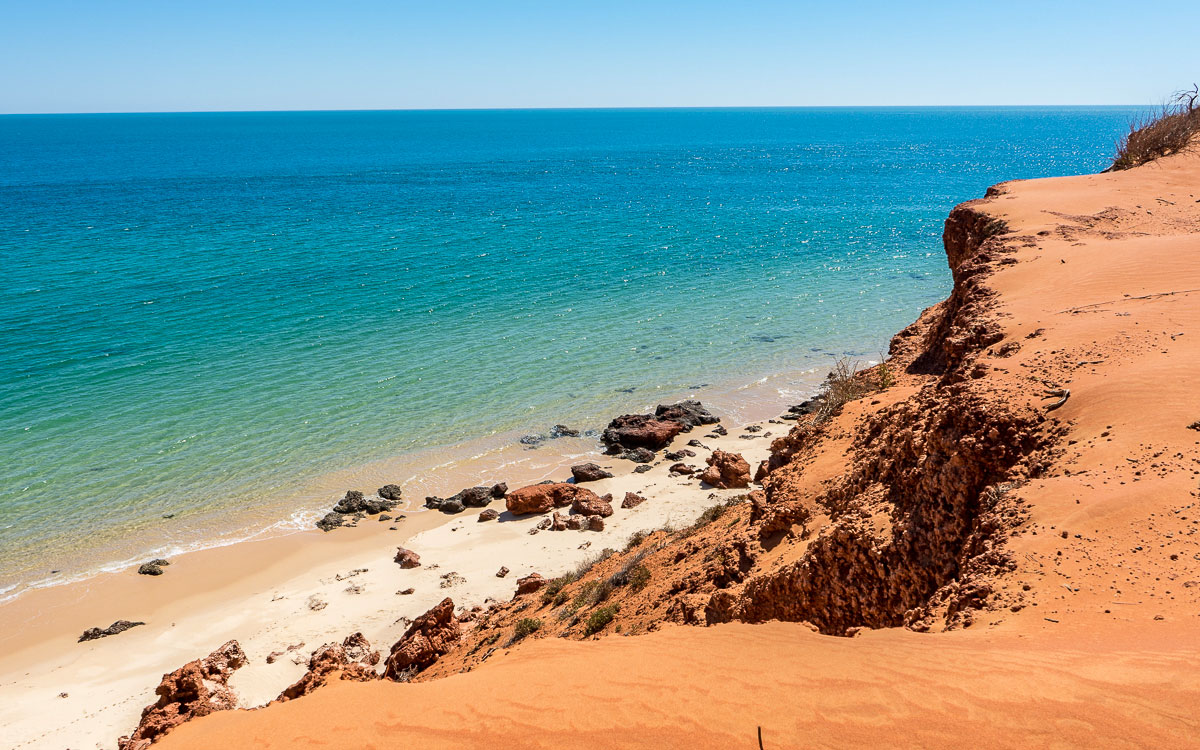
Beautiful Australia: François Peron National Park. Colour contrasts: red, orange, white and turquoise! An absolute top sight on Australia's west coast. 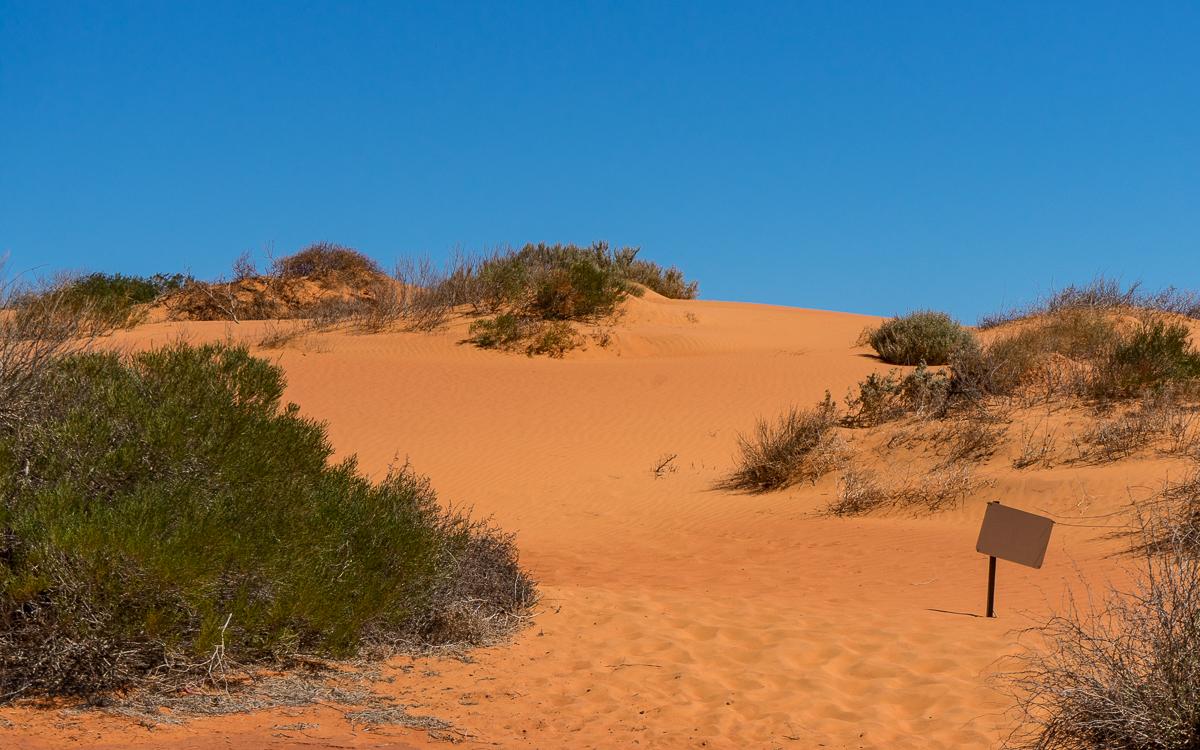 You can find these great red sand dunes everywhere in François Peron NP!
  We could watch stingrays from above in the water!
 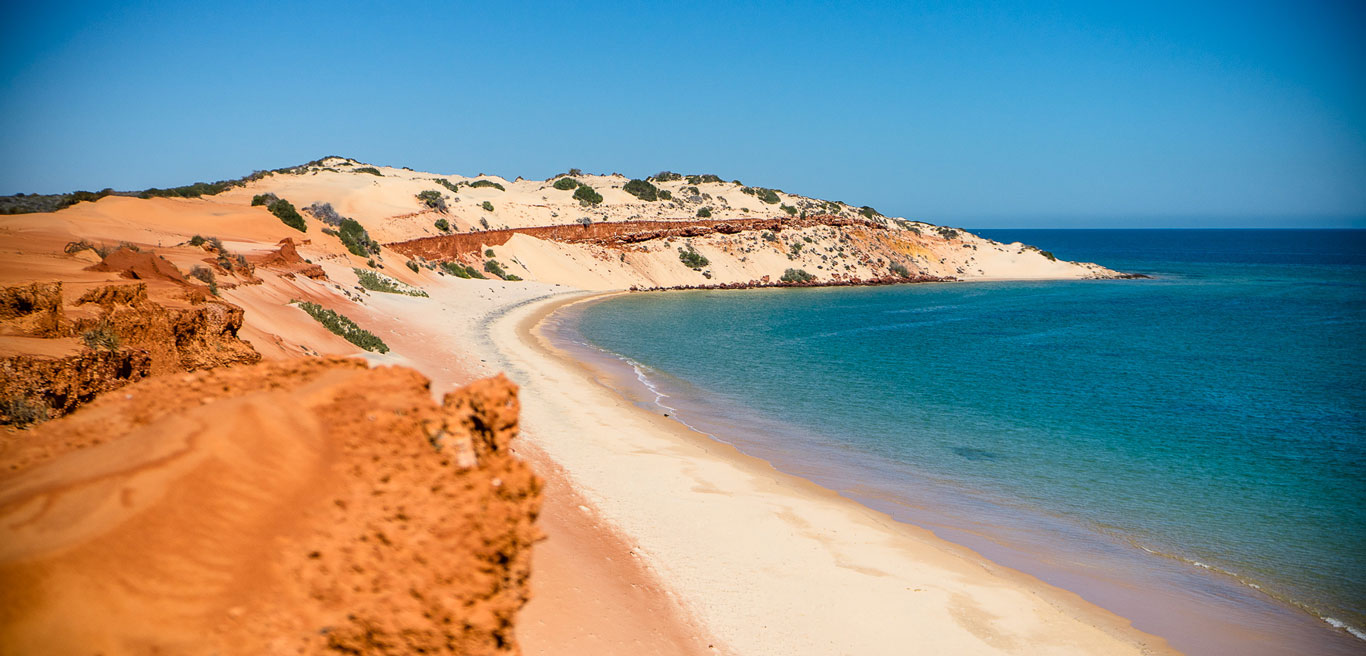 Cape Peron in the François Péron National Park in Australia, one of the most beautiful sights on the west coast. Ningaloo Reef, swimming with whale sharks
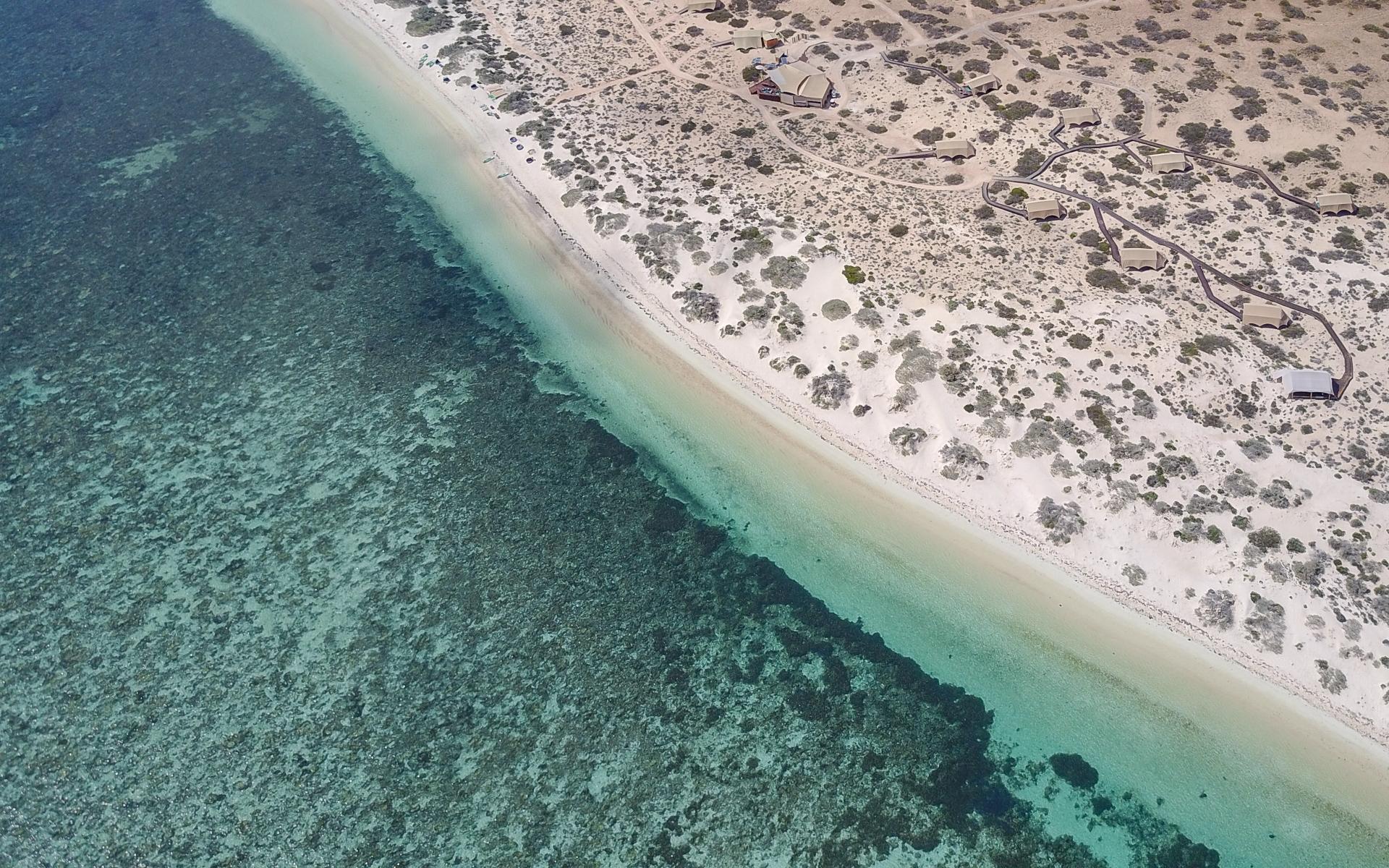
Ningaloo Reef is Western Australia's answer to the Great Barrier Reef in the east. The 250 km long fringing reef is only 50 metres from the beach, so it is easily accessible and fortunately strictly protected. The corals are huge and, most importantly, they are still growing - unlike many other places in the world.
The absolute highlight here is to swim with whale sharks (or humpback whales in summer). The experience is unforgettable and could not be described in words.
Read my detailed report on the Swimming with whale sharks at Ningaloo Reef.
The Ningaloo Reef has even more to offer ...
Besides whale sharks, the underwater world offers the chance to see stingrays, devil rays, dolphins, dugongs, sharks, turtles, orcas and humpback whales. Apart from turtles, we saw stingrays, dolphins, small sharks and numerous colourful fish and unfortunately also jellyfish (including the very dangerous ones). The reef is sensational! I haven't seen such a lively coral reef for a long time (neither in Honduras at the Belize Barrier Reef nor in Florida or Indonesia).
Glamping at Ningaloo Reef
We stayed at the luxurious Sal Salis, which is located in the middle of the national park between the outback, sand dunes and the sea. The glamping accommodation was voted the fourth most beautiful eco-resort in the world by Lonely Planet in 2017. Quite rightly.
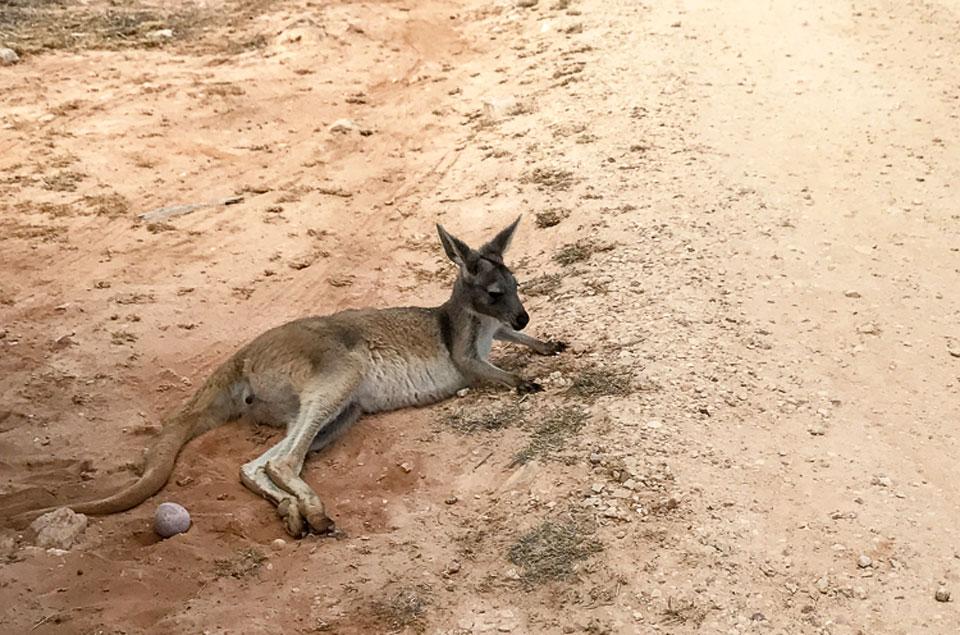
Glamping at its best with a view of the sea and the Milky Way at night. During the day you can explore the reef by kayak, SUP or snorkelling. We tried all of these. Including a hike before sunset to Yardie Creek, where numerous kangaroos (Euros) cavort.
Tips for accommodation at Ningaloo Reef:
Sal Salis, luxury camp in the national park between the outback and the sea, with its own beach on the reef.
Exmouth: For "budget travellers" Ningaloo Lodge Exmouth. Disadvantage: Daily driving in and out of the park.
Various campsites in the national park, but you have to book them well in advance.
Karijini National Park
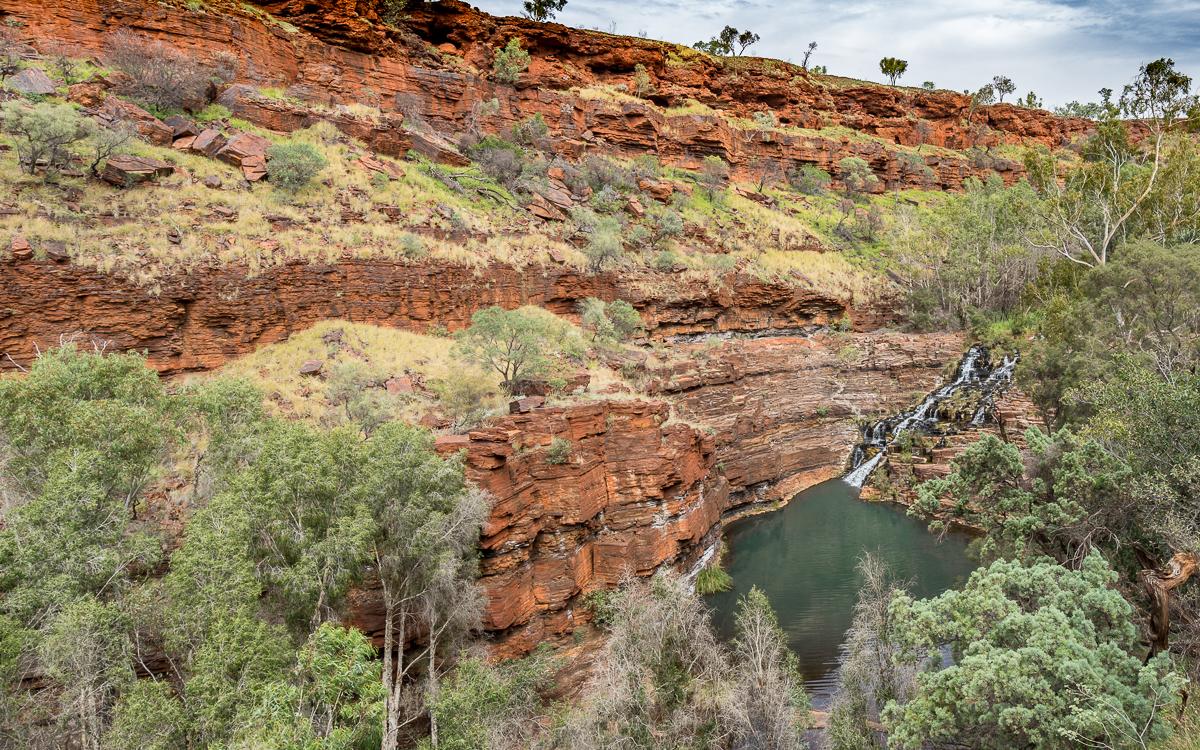
Bright red rock faces plunge into the depths of Karijini National Park. In the middle of the gorges are natural water pools, which we wade through, swim or climb along on two days. I feel like I'm in an adventure playground. Except that here nature is the creator.
I climb on all fours through narrow gorges, ice-cold azure water below me. It ends in a pool where I cool off at the end of the gorge. So we spend two days climbing through the gorges. Dales Gorge, Weano Gorge, Hankock Gorge and Joffre Gorge, just to name the ones I visit.
The ancient rock faces in Karijini National Park are over 2.5 billion years old. They glow bright orange or dark red depending on the sun. The adventure far from civilisation and mobile phone reception is great. Many people don't stray here. It's a shame, because for me it's one of the most beautiful places in Western Australia. A place where you can completely shut down and be one with nature.
Karijini National Park is the second largest in Western Australia and is located in the middle of the Pilbarra region. The distance to Exmouth (almost 650 km) and Broome (almost 1000 km) give an idea why so few people stray here. The long journey is worth it, nature has created wonderful things here.
Read on here: My tips for visiting Karijini National Park in Western Australia.
Dales Gorge and Fortescue Falls 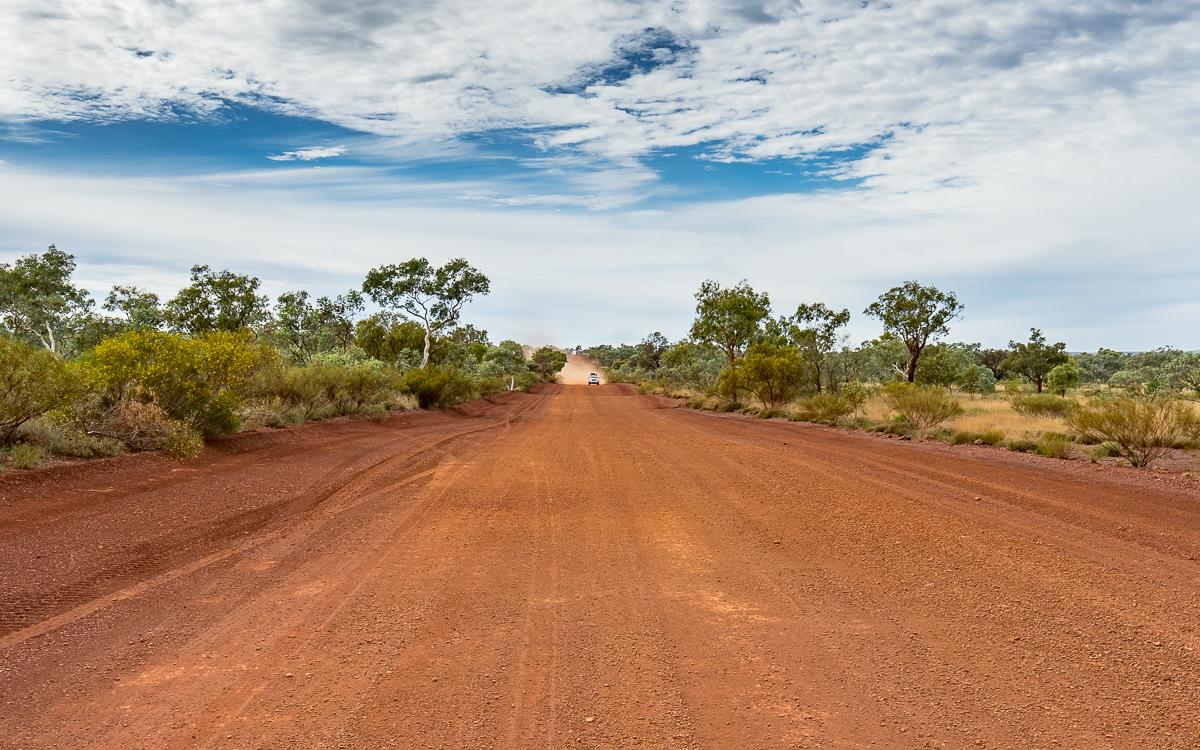 Red sand on the dirt roads in Karijini National Park Broome
Broome, the "gateway to the Kimberley" and worldwide centre of the pearl industry, we reach after driving more than 3,800 kilometres since leaving Perth. The town is small and sprawling. Nevertheless, it surprises me in a positive way. Broome is somehow cosy and relaxing.
Tropical temperatures around 30 degrees, wide kilometre-long beaches, turquoise water and bright red rock formations starting behind the beach. Not to mention those sunsets. Magical.
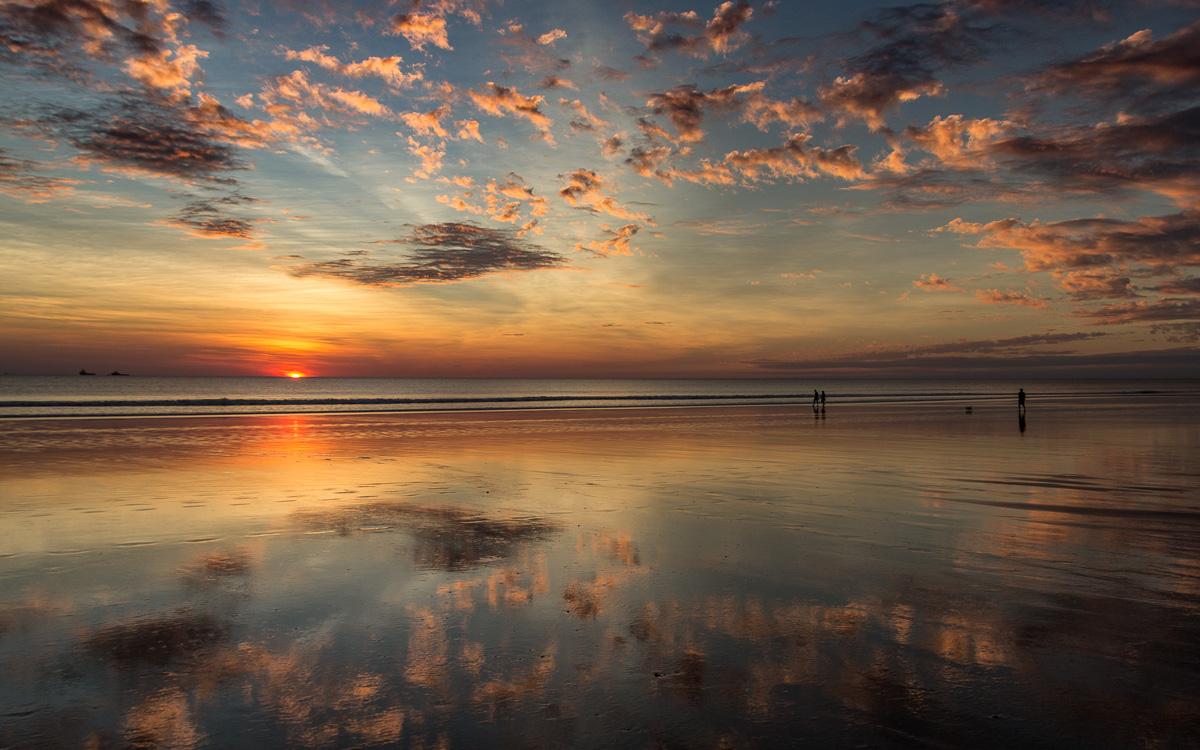
Magical moments in Broome when the sun sinks into the sea and the sky is reflected in the sandy beach of Cable Beach.
I have now spent five days in the pearl fishing capital of northern Western Australia. At first I wanted to move on more quickly, but then I was quite happy to rest, sleep in and do nothing for a change.
We rented a place with Trish, who had advertised a wonderful "tree house" behind her little house with her dog Maddy on Airbnb. A true oasis of peace in tropically hot Broome.
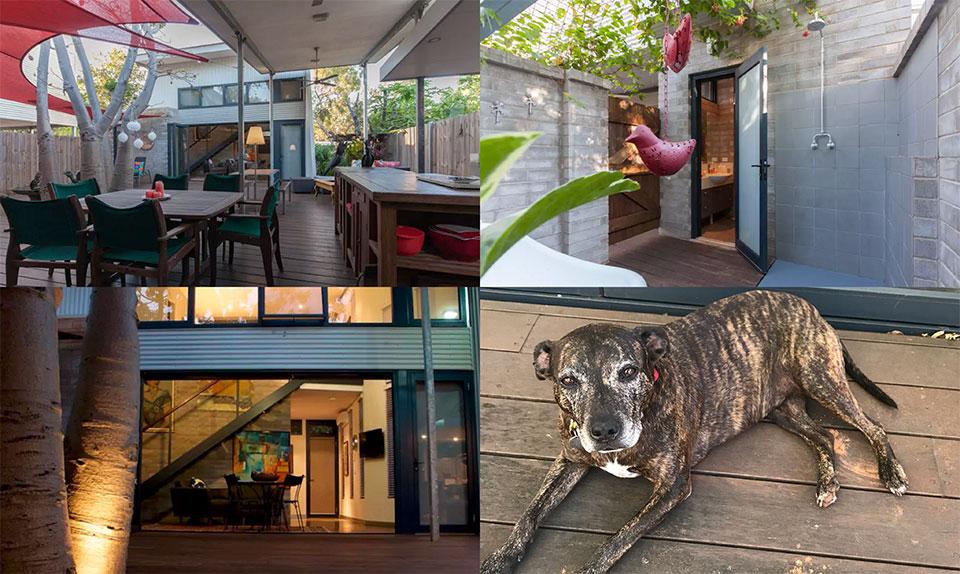
Great accommodation in Broome by Trish and dog Maddy
What did I particularly like about Broome? The baobab trees that remind me of Africa grow everywhere here. By the way, baobabs are typical for the Kimberley region and can only be found here in Australia.
To start in Broome, we took a town tour with Bart from Narlijia Cultural Tours. He takes us on a journey through the past of Broome and its ancestors, the Yawuru, the indigenous people. The most important places of the Yawuru, the local plants and foods as well as places of the Dreamtime.
Bart also told us a lot about the development of the pearl industry with influences from Asia on the population during the entertaining tour.
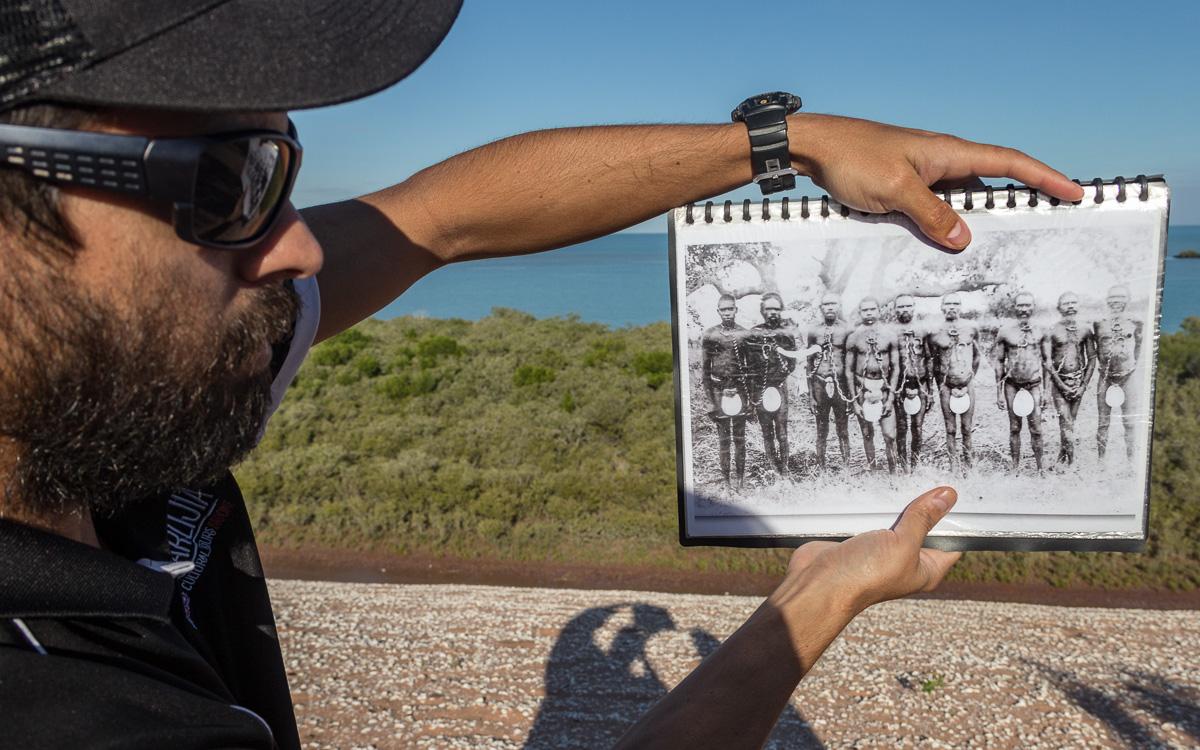
Bart knows a lot about the culture and history of Broome and the indigenous people. 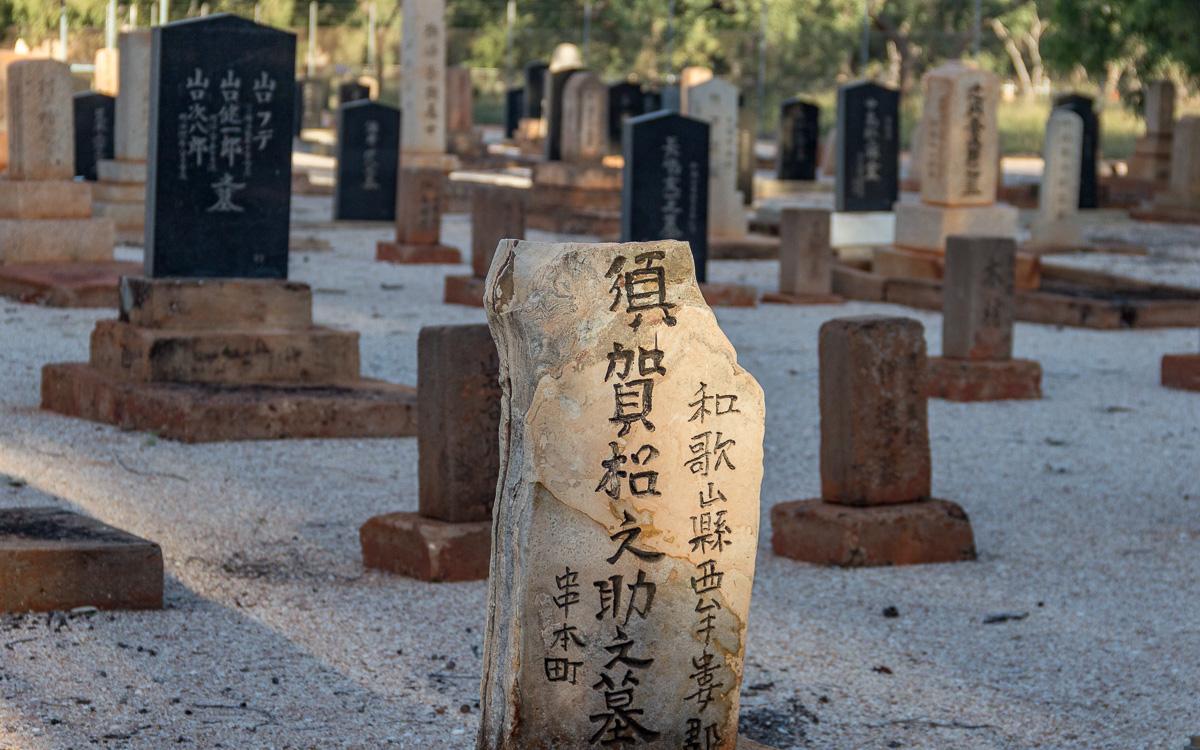 Japanese cemetery in Broome
As there was still time and the tides were favourable, we spontaneously drove to Rendell Beach, where he recently found dinosaur tracks. You can see them on every beach here at low tide, if you know what and where to look for. Thanks to Bart, we got to see them.
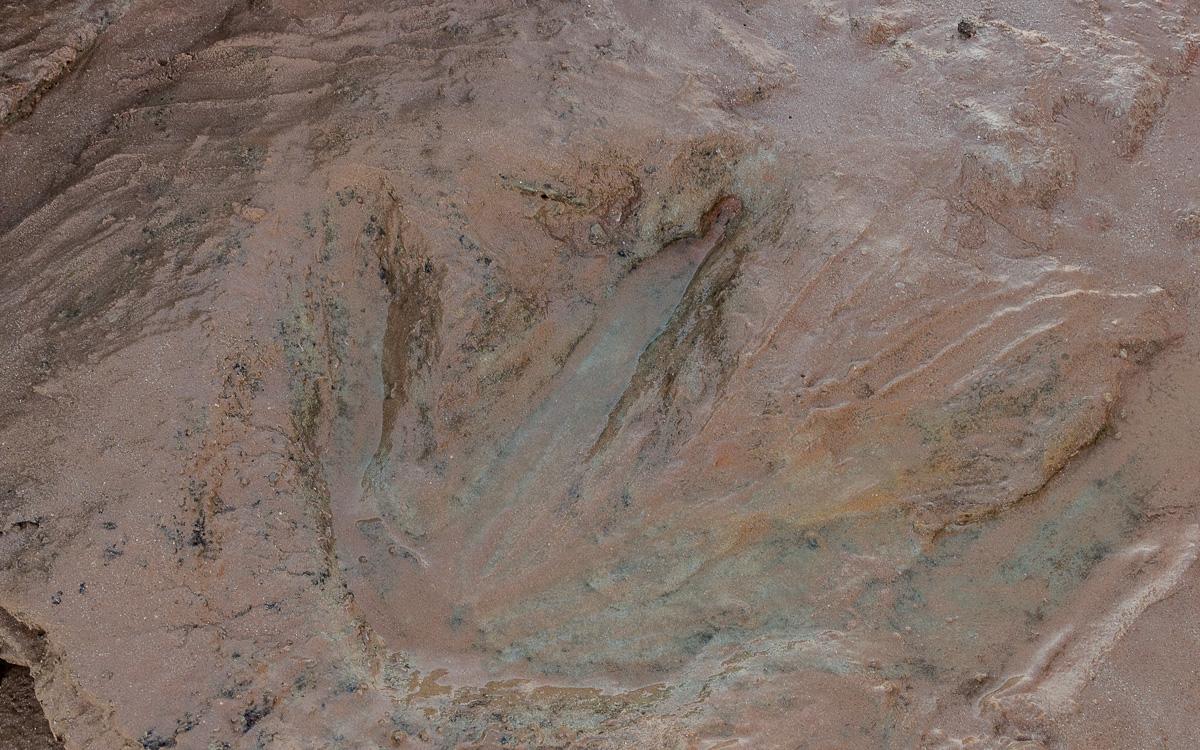
Recently found dinosaur tracks at Redell Beach in Broome
We also watched the infamous sunsets, which are hard to beat in terms of colour intensity, evening after evening with dozens of other people from the beaches.
Whether at the famous Cable Beach, where camels pass by on top of the setting sun, at Rendell Beach, where you can see dinosaur tracks at the same time as the tide goes out and the sea recedes, or on the rocks at Gantheaume Point on the south-eastern edge of the city.
Here, the sandstone cliffs glow in all shades of red just before the sun sets. The best way to listen to the sound of the turquoise sea below is with a cold drink in your hand.
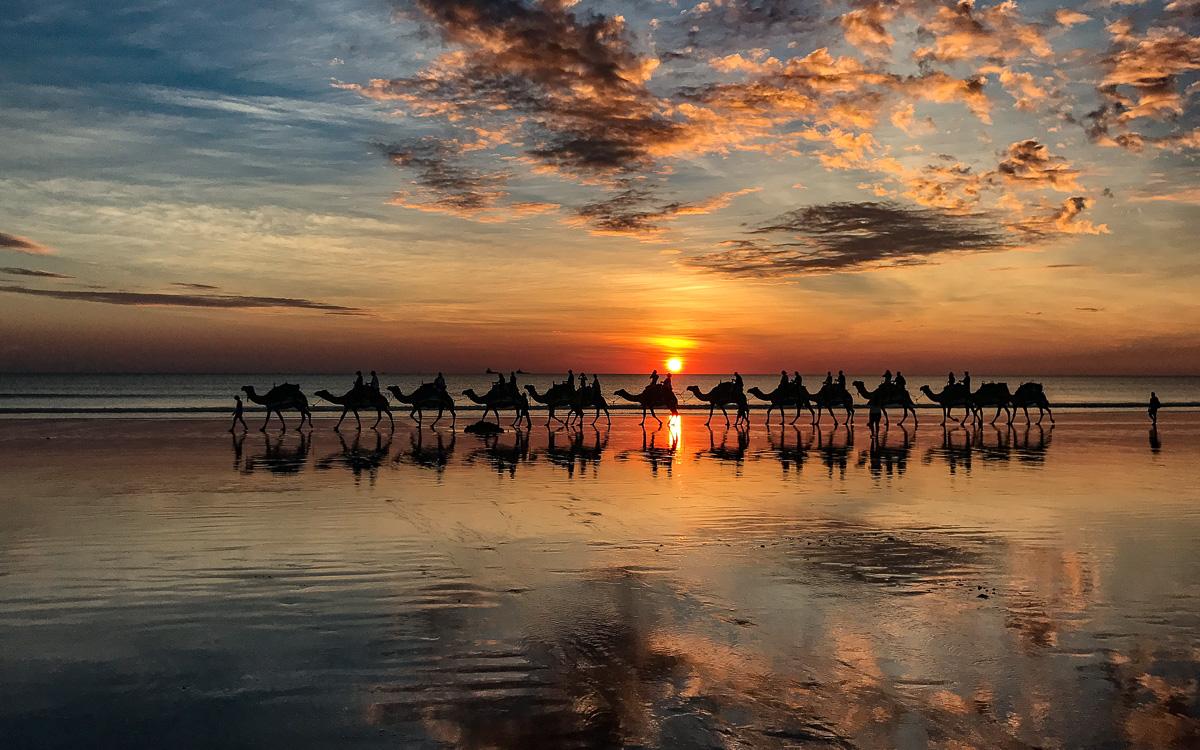
Kitschy sunsets are guaranteed with camel caravans on Broome's Cable Beach. 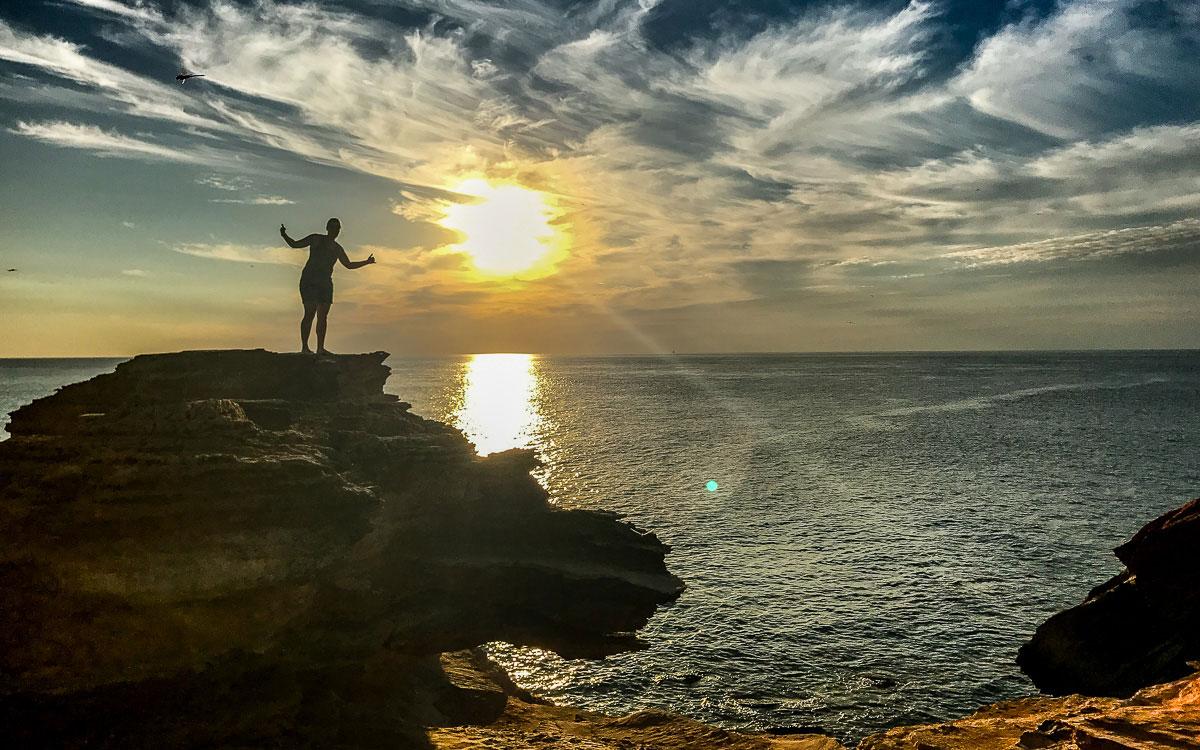 Me on the cliffs of Gantheaume Point in Broome - at sunset, of course.
By the way, there are never traffic jams in Broome, except every evening at Cable Beach. The great hobby of all Australians seems to be another one besides fishing: Driving the four-wheel drive onto the beach to watch the sunset from there in a camping chair with a cold beer in hand.
This volume of traffic and this noise - unbelievable. I think it's terrible that this driving is not generally banned on beaches.
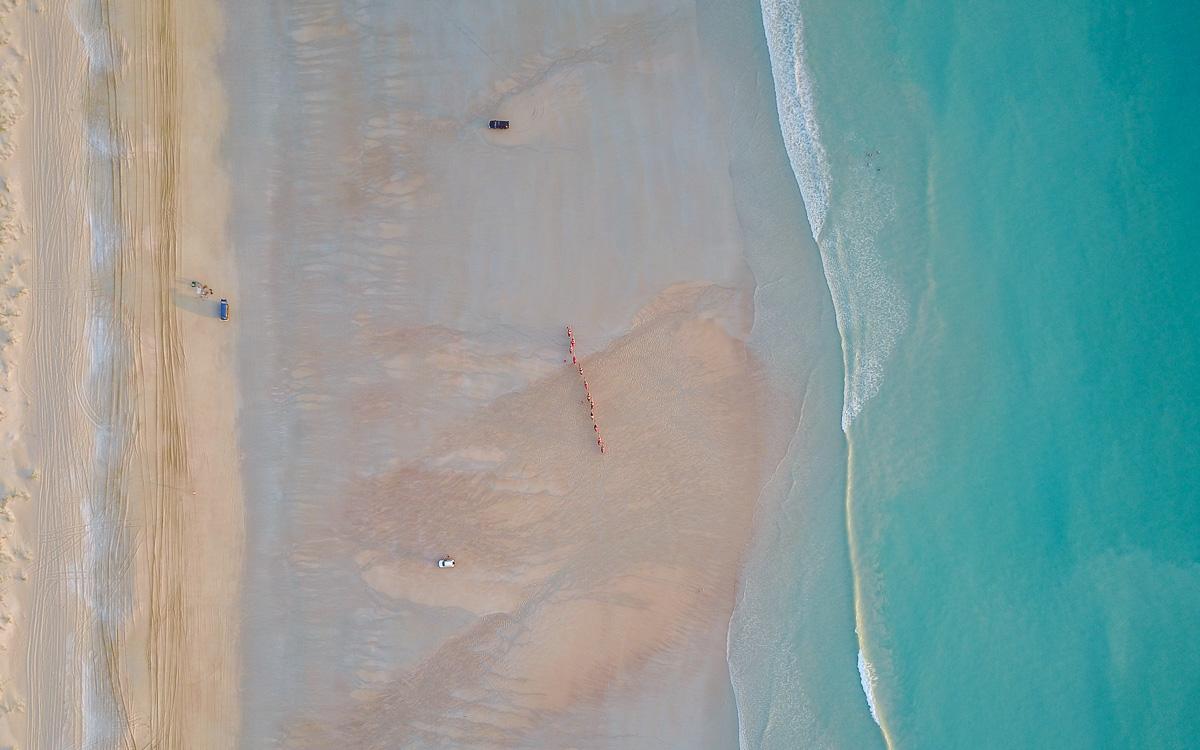
Deep ruts, cars and camels. This is what sunsets (or like here just before) look like on the beach.
During the day we explore Broome's oldest district: Chinatown. Here you will find numerous shops, restaurants and jewellery shops where you can buy pearls from Broome. For entertainment, Sun Pictures, the oldest open-air cinema in the world, is located here.
Here you can watch the latest Hollywood films on beach chairs under the stars. But don't forget the mosquito spray. The films didn't appeal to me, so I only went during the day. From 10 am, you can just go into the cinema and have a look around.
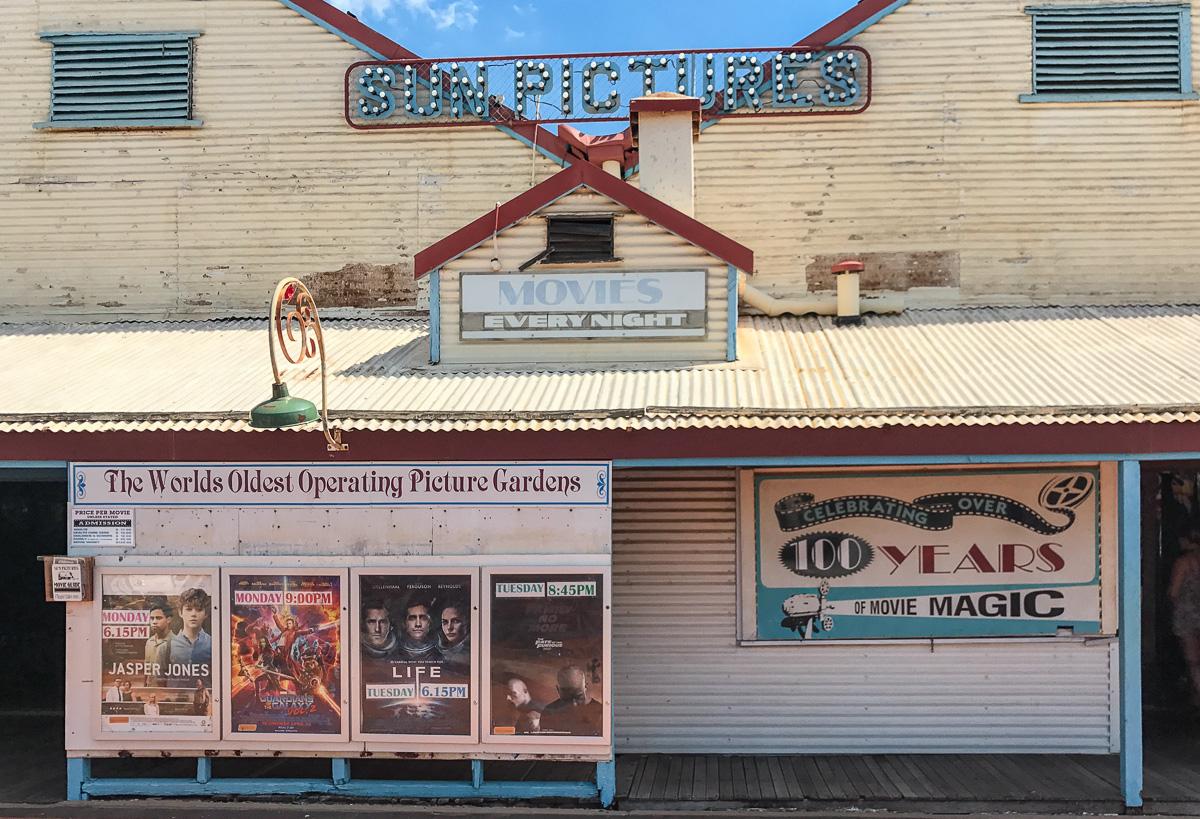
Sun Pictures in Broome, the oldest open-air cinema in the world
More tips and info for Broome
Check out our tree house accommodation on Airbnb.
Cultural Tour with Bart from Narlijia Cultural Tours
Watch a movie at Sun Pictures, the world's oldest open-air cinema(see programme)
Food & Drink Tips: Matso's Brewery and Divers Tavern (Friday nights live music)
Travel tips & useful information
The best way to explore the west coast of Australia is with a motorhome or smaller campervan. Since we booked too spontaneously, we had to resort to a rental car. This is of course possible, as there are motels and hotels everywhere, but with a motorhome you are more flexible and can stay at the nicer places, directly at the beach or in the national park. If there is only one option for a local restaurant (often a bad one), you can then cook for yourself.
How much time should I plan for the West Coast?
For the direct route of the West Coast from Perth to Broome at least ten days are recommended. As we are travelling with a 4WD and not a camper and don't want to change accommodation every night, we have planned about 17 - 18 days for the route. Due to the late onset of the rainy season before our trip and the extremely wet February, we had to cancel the trip via the Gibb River Road already before the trip.
As we would not have been able to leave the alternative route (tarmac road) to visit all the great places along the way, we flew from Broome to Darwin. This gave us time to visit more National Parks in the Northern Territory and Arnhem Land to explore
Would you like to travel Perth south to Margaret River or even Esperance I recommend you plan at least another 3 weeks. These regions are also beautiful and I enjoyed them very much!
Read the travelogue for the route from Adelaide to Perth (via Esperance and Margaret River) here.
In general, I would recommend booking a camper for this route. I have found many reasons for this: You are not dependent on - by our standards - expensive and outdated motels, you can cook better and healthier food yourself and thus save a lot of money.
Even though I was travelling in autumn (April - May) and the nights were quite fresh, a camper is worthwhile. Because the blankets in the motels are not better. Rather thinner. You have to know that campers in Australia are not insulated, because 80-90% of the year it is too hot.
Caution: Do not underestimate the size of Australia when planning your trip. Western Australia alone covers 1/3 of Australia. If you are short on time and holidays, you should think carefully about which route you choose. Also, don't forget the additional costs of one-way rental cars or campers.
I hope this article helps you plan your route!
Best travel guide for Western Australia
Before my trip, I bought almost all existing travel guides about Australia as ebooks.
The only printed guide I had with me was Western Australia and the Top End. I found this one in combination with the Lonely Planet Australia (ebook)) and the English-language Lonely Planet in combination with the travel guide West Coast Australia the best. The guides complemented each other perfectly.
For campers, the Iwanowski, the Baedecker and the Loose might be okay for Australia. I didn't get more valuable tips in any of the guides that I didn't get in more detail in one of the guides above.
When is the best time to go on a road trip along the west coast of Australia?
Australia is huge. Western Australia takes up a third of it. This means you can go from one climate zone to the other in one day.
If you want to go whale-watching or snorkelling with whale sharks on the west coast, you should check for each region when the best time for watching is. The whales migrate from south to north. As a result, the seasons vary slightly.
Southern Western Australia:In the south, the climate is quite European and temperate. The summers are warm, the autumn (April - May) also quite pleasant, but the nights are already cold. Especially when you consider that the houses have no heating. I really froze at the beginning when we were travelling at the end of March/beginning of April.
In winter (June - September) it gets even colder, especially at night. Temperatures drop into the single digits.
Northern Western Australia:The climate in the north is tropical with temperatures above 40 degrees in summer (December - March). It is also very humid and extremely humid. Then comes the rainy season, when it rains very heavily at least once a day. Roads are often over a metre under water and impassable. In addition, you should not go swimming then, as the deadly box jellyfish can be found in the water.
See the best time to travel in Australia


